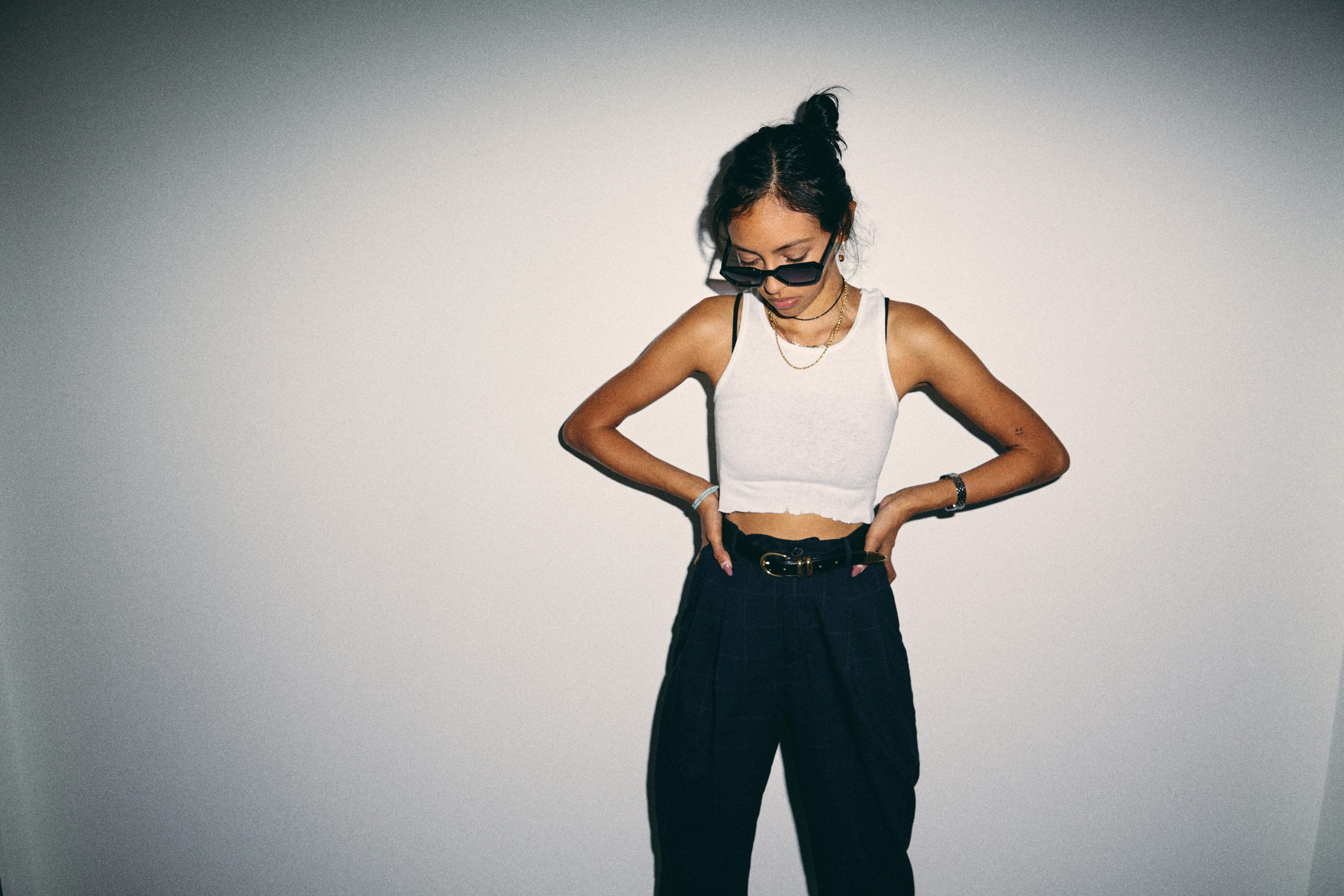
You stand in front a closet packed with clothes, yet you feel completely uninspired. You spent time picking out clean, coordinated pieces, but when you look in the full-length mirror, the reflection feels flat. There is nothing technically wrong with what you are wearing—it is clean, it fits, and the colors do not clash—but it completely lacks personality.
If you frequently find yourself staring into a full closet asking, “Why do my outfits always look boring?” you are far from alone. This is one of the most common frustrations in personal styling, and it rarely means you need to go on a massive shopping spree. More often than not, the issue is not what you are wearing, but how those pieces are being brought together.
The Root Causes: Why Your Outfits Always Look Boring
When an outfit feels dull, our immediate instinct is to blame the individual clothes. We think we need a flashier jacket, a brighter shirt, or a brand-new pair of trendy shoes. In reality, a closet full of beautiful items can still produce uninspiring looks if the principles of visual balance, texture, and contrast are ignored.
1. Over-Reliance on Everyday Basics without Context
Basics are the foundation of any functional wardrobe. High-quality t-shirts, straight-leg jeans, and simple knit sweaters are essential. However, when an outfit consists entirely of neutral basics with no supporting elements, it lacks a focal point.
If you pair a plain black t-shirt with plain blue jeans and plain white sneakers, the eye has nowhere to rest. The clothing becomes a uniform rather than an expression of style. Basics need a counterpart—a point of contrast or a deliberate detail—to shift them from “default clothing” to a curated look.
2. The Absence of Visual Texture
Texture is the hidden language of styling. When every item in your outfit has the exact same flat, smooth surface texture—such as fine-gauge cotton or jersey—the outfit lacks depth.
Think of an outfit as a room design. If a room has smooth drywall, smooth leather couches, and smooth hardwood floors with no rugs or curtains, it feels cold and institutional. The same applies to your body. When you mix different fabric weights and weaves, you create subtle shadows and highlights that make even a completely monochrome outfit look rich and deliberate.
3. Lack of Intentional Contrast and Tonal Depth
Matching your clothes too perfectly can actually work against you. If you wear a medium-gray sweater with medium-gray trousers, and both pieces share the exact same visual weight and tone, you disappear into a singular block of color.
Without contrast—whether that means contrast in color, value (light vs. dark), or style (casual vs. formal)—an ensemble can feel incredibly monotonous. A look needs friction to look interesting.
4. Ignoring the Importance of Silhouette and Fit
An outfit can become boring if it mimics the exact shape of your body without creating any interesting lines of its own. Alternatively, wearing everything oversized or everything skin-tight eliminates the opportunity to play with proportions. If your clothes simply sit on you without defining a clear shape, the overall look will fail to grab attention or feel stylish.
Common Styling Mistakes That Drain Life From an Outfit
Many people fall into specific styling habits because they feel safe. While these habits prevent fashion disasters, they also prevent style successes.
Mistake: The “Two-Piece” Habit
The majority of people dress in a two-piece format: a top and a bottom. You put on a shirt, you put on pants, and you walk out the door. While practical, this approach leaves the outfit looking unfinished. It lacks layers, movement, and complexity.
Mistake: Choosing Safety Over Visual Tension
Visual tension occurs when you pair things that do not traditionally belong together but complement each other perfectly. For example, pairing a delicate silk skirt with a chunky, rugged wool sweater creates tension.
If you only pair casual items with casual items (like a hoodie with sweatpants) or formal items with formal items (a crisp button-down with stiff trousers), the outfit can feel predictable and stale.
Mistake: Buying Clothes for an Imaginary Lifestyle
We often buy clothes based on who we want to be, not who we actually are. If you buy flashy, complex pieces that do not fit your daily routine, they will sit in your closet with the tags on. Then, when dressing for your actual life, you resort to your safest, oldest, and most worn-out basics, leading directly back to the feeling of being stuck in a style rut.
Practical Solutions to Instantly Elevate a Flat Look
You do not need an entirely new wardrobe to fix an outfit that feels uninspired. Often, small adjustments using items you already own can completely change the dynamic of a look.
The “Third Piece” Rule
This is one of the easiest and most reliable styling frameworks used by professionals. The rule dictates that a great outfit consists of a top (piece one), a bottom (piece two), and a third element that ties them together (piece three).
A third piece could be:
- A structured blazer or denim jacket.
- An open flannel shirt worn over a t-shirt.
- A lightweight trench coat.
- A prominent sweater tied diagonally over the shoulders.
- A bold, distinct belt or a substantial scarf.
The third piece adds a layer of depth, introduces new lines, and signals that the outfit was put together intentionally rather than assembled by default.
Manipulating Proportions (The 1/3 to 2/3 Rule)
Human eyes naturally prefer proportions that follow the “Rule of Thirds” rather than dividing the body cleanly in half. If your outfit cuts you exactly in half at the waist (a 50/50 split), it can look blocky and awkward.
Instead, aim for a 1/3 to 2/3 distribution. You can achieve this by high-waisted trousers paired with a tucked-in shirt, creating a short upper third and a long lower two-thirds. Alternatively, you can wear a long tunic or oversized cardigan over slim pants to create a long upper two-thirds and a shorter lower third.
This simple shift instantly makes an outfit look more editorial.
Standard 50/50 Split (Often Boring):
- Untucked Regular T-Shirt ] -> Represents 50% of visual height.
- Standard Mid-Rise Jeans ] -> Represents 50% of visual height
Elevated 1/3 to 2/3 Split (Dynamic):
- Tucked-In Top -> Represents 33% of visual height.
- High-Waisted Trousers -> Represents 66% of visual height.
Mixing Textures Instead of Colors
If you prefer neutral or monochromatic palettes, you must rely on texture to do the heavy lifting. Instead of wearing smooth cotton on smooth cotton, try layering contrasting textiles.
| Piece Type | Flat Texture Option | Elevated Textured Alternative |
|---|---|---|
| Top | Plain cotton crewneck | Ribbed knit sweater, waffle-weave long sleeve, or linen button-down |
| Bottom | Standard smooth chinos | Corduroy pants, heavy denim, or fluid silk-blend trousers |
| Outerwear | Basic nylon windbreaker | Suede jacket, oversized tweed blazer, or textured shearling vest |
| Footwear | Flat synthetic leather shoes | Matte suede boots, pebbled leather loafers, or high-sheen polished leather shoes |
A Beginner’s Guide to Daily Styling Strategy
If you want to ensure your outfits consistently look interesting without spending an hour getting dress every morning, you need a repeatable system. Styling is a skill that can be practiced and broken down into logical steps.
Step 1: Establish Your Canvas
Start with two reliable pieces that fit you perfectly. This is your foundation. For instance, a well-fitting white tee and charcoal wool trousers. At this stage, the look is still plain, which is exactly where it should be.
Step 2: Inject “Friction”
Look at your canvas and identify what it is missing. If the canvas is highly structured and formal, add something casual or soft. If the canvas is incredibly casual, add a touch of structure. For our white tee and charcoal trousers look, adding a slightly oversized, unbuttoned denim shirt provides a casual layer that counterbalances the formality of the trousers.
Step 3: Anchor with Footwear
Shoes dictate the ultimate direction of an outfit. Putting thin, flimsy canvas sneakers with a heavy winter coat looks mismatched. Ensure the visual weight of your footwear matches the rest of your clothing. Chunky loafers, lug-sole boots, or retro running sneakers with distinct panels can completely change the attitude of a simple base outfit.
Step 4: The 5-Minute Detail Check
Before leaving the house, look for small opportunities to show intention. Roll the sleeves of your jacket back slightly to expose your wrists. Tuck one corner of your sweater into your waistband (the “French tuck”) to reveal your belt line. Add a simple metal watch or a pair of classic earrings. These tiny adjustments take seconds but instantly remove the “boring” tag from an ensemble.
WARNING: The Fast Fashion Trap Many people try to solve a boring wardrobe by constantly buying cheap, trendy items from fast-fashion retailers. These items often look great on a screen but are made from thin, synthetic materials that lay flat, wrinkle easily, and lack structural integrity. A closet stuffed with poorly constructed clothes will always feel uninspiring. Focus instead on the weight, drape, and build quality of fewer, better pieces.
The 5-Minute Outfit Check Before Leaving the House
Use this quick checklist whenever you look in the mirror and feel like your outfit is missing something:
- Is there a point of interest? Does the eye have one specific area to focus on, such as a pattern, a unique shoe, or an accessory?
- Are there at least two different textures present? (e.g., denim mixed with knitwear, or leather mixed with cotton).
- How are the proportions? Am I cut exactly in half, or have I created a more dynamic 1/3 to 2/3 visual balance?
- Did I add a third piece? If the weather permits, do I have an outer layer, a statement belt, or a deliberate accessory to tie the top and bottom together?
- Are my hemlines deliberate? Are my pants pooling awkwardly over my shoes, or have I cuffed or tailored them to hit at a clean, flattering height?
FAQs About Fixes for Boring Outfits
Can I look stylish if I only wear neutral colors like black, white, and gray?
Absolutely. Some of the most celebrated styles in the world rely entirely on a neutral palette. However, when you eliminate color, you must maximize your use of texture, silhouette, and fit. Mix a matte black denim with a high-shine black leather jacket, or pair a voluminous charcoal grey coat with slim, tailored black trousers to create contrast without needing bright colors.
I don’t like wearing jewelry. How else can I add interest to my outfits?
Jewelry is just one tool among many. If you prefer to avoid rings, necklaces, or bracelets, you can use utilitarian details to add interest. Look for clothing with distinct hardware, such as visible brass zippers, tortoiseshell buttons, or unique pocket placements. You can also use premium leather goods, interesting belts, structured bags, or even unique eyewear to add personality.
How do I make comfortable, casual clothes look less dull?
Comfort does not have to mean boring. To elevate casual wear, focus heavily on the fit and fabric quality. Upgrade a cheap, thin hoodie to a heavy, high-gsm organic cotton sweatshirt that holds its shape. Swap baggy sweatpants for tailored knit joggers or relaxed-fit trousers with an elastic waist. Simply ensuring your casual wear looks clean, structured, and intentional will keep it looking sharp.
Why do outfits that look great on influencers look boring on me?
Online fashion images are highly manipulated by specific lighting, dynamic body posing, professional camera angles, and temporary styling tricks (like clipping clothes in the back). When you wear those exact items in real life while standing completely straight under harsh ambient light, the effect changes. Focus on how clothes move and drape on your body in real life, rather than trying to replicate a static digital image.
Final Thoughts on Elevating Your Style
If you are tired of looking in the mirror and wondering, “Why do my outfits always look boring?” remember that style is a systematic practice rather than an innate talent. You do not need a massive budget, a Hollywood stylist, or a closet full of eccentric avant-garde clothing to look put together.
By simply stepping away from the standard two-piece habit, embracing the power of contrasting textures, manipulating your visual proportions, and adding a deliberate third piece, you can transform basic, everyday items into compelling outfits. Take a closer look at what you already own, experiment with unexpected combinations, and focus on the small details that show real intention.