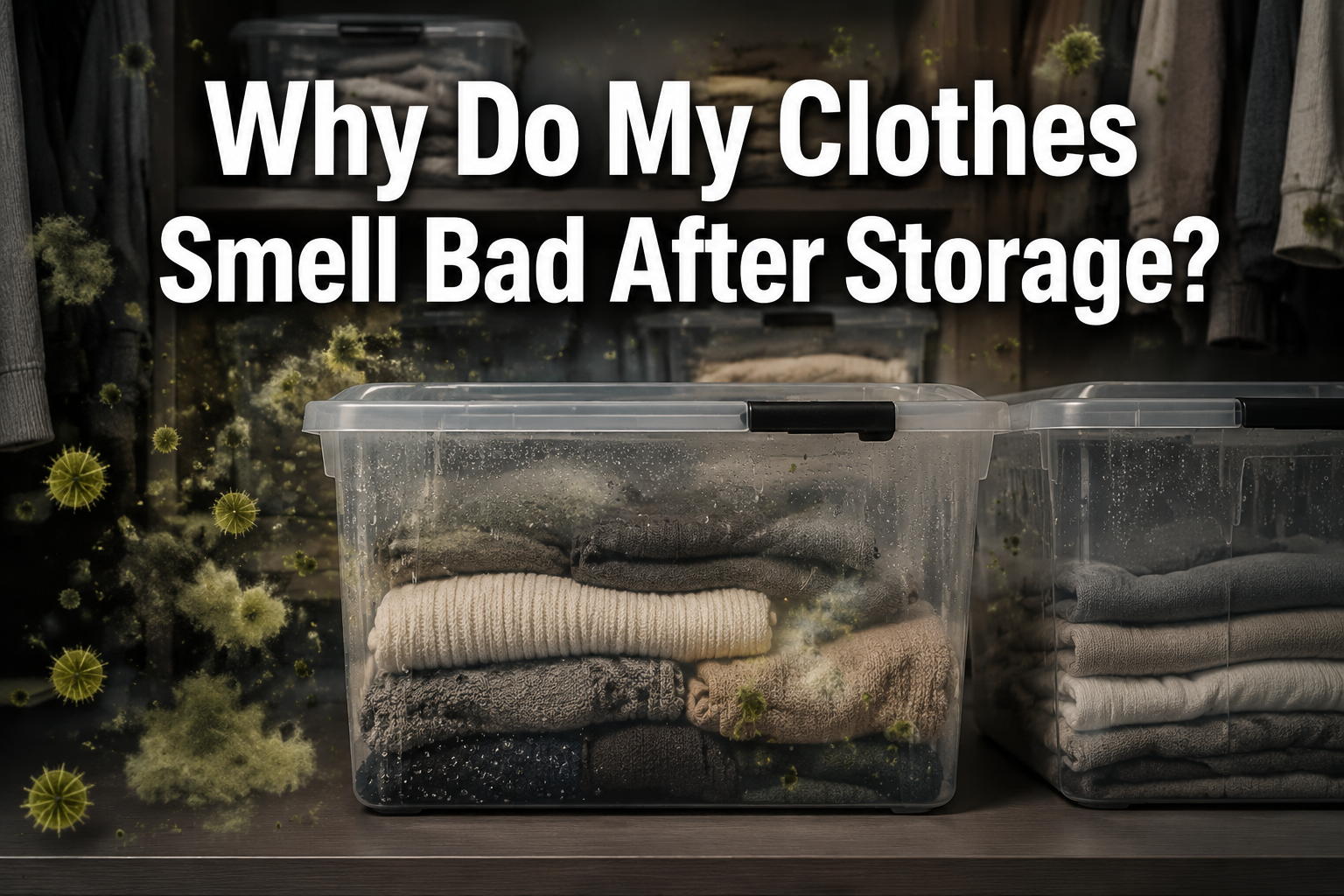
Clothes smell bad after storage because trapped moisture creates the perfect environment for bacteria and mold to grow on fabric. When garments aren’t completely dry before storage or are kept in damp, poorly ventilated spaces, microbes feed on residual sweat and skin cells, producing musty and sour odors that intensify in closed containers.
What Causes Clothes to Smell Bad After Storage?
The primary cause of smelly stored clothes is moisture combined with poor air circulation. When clothes retain even small amounts of water from washing or environmental humidity, bacteria and mold spores already present on the fabric begin to multiply rapidly.
The Science Behind Storage Odors
Bacterial activity is the main source of unpleasant smells. Research shows that Moraxella osloensis, a common bacterium that survives typical wash cycles, produces a compound called 4-methyl-3-hexenoic acid. This chemical creates the characteristic “dirty laundry” smell that gets stronger when clothes are stored in closed spaces.
Mold and mildew growth occurs when humidity levels exceed 60% in storage areas. These fungi release volatile organic compounds (VOCs) that create musty odors and can transfer to clean clothes over time.
Common Storage Mistakes That Create Odors
- Storing slightly damp clothes – Even clothes that feel dry may retain moisture.
- Using airtight containers without moisture absorbers.
- Overpacking storage spaces – Prevents air circulation.
- Ignoring storage area humidity – Basements and attics often have moisture problems.
- Not cleaning clothes thoroughly – Residual sweat and oils feed bacteria.
Why Do Clean Clothes Smell Bad After Storage?

Even freshly washed clothes can develop odors in storage because washing doesn’t eliminate all bacteria and organic residues. Modern energy-efficient wash cycles using cooler water temperatures are less effective at killing microbes, allowing them to survive and multiply during storage.
Hidden Contaminants on “Clean” Clothes
Body oils and sweat residues often remain on fabric even after washing, especially on synthetic materials and workout gear. These organic compounds serve as food for bacteria during storage periods.
Detergent and fabric softener buildup can trap moisture and create a film that harbors bacteria. Over time, this buildup becomes a breeding ground for odor-producing microbes.
Environmental contaminants from the storage space itself can transfer to clothes. Musty closets, damp wooden drawers, or moldy storage units release spores and odor compounds that penetrate fabric fibers.
Why Synthetic Fabrics Smell Worse?
Synthetic materials like polyester and nylon are more prone to storage odors because they:
- Trap oils and moisture more readily than natural fibers.
- Create static that attracts dust and particles.
- Don’t breathe as well as cotton or wool.
- Hold onto bacteria more tenaciously.
How Does Storage Location Affect Clothes Smell?
Storage environment directly impacts odor development. Areas with high humidity, poor ventilation, or existing mold problems will cause clothes to smell bad much faster than climate-controlled spaces.
High-Risk Storage Locations
Basements and crawl spaces often have humidity levels above 60%, creating ideal conditions for mold growth. Concrete walls can “sweat” and add moisture to the air.
Attics and garages experience temperature fluctuations that create condensation. Hot days followed by cool nights cause moisture to form inside storage containers.
Rental storage units without climate control can reach extreme humidity levels, especially in summer months. Poor ventilation compounds the problem.
Optimal Storage Conditions
- Humidity below 50% prevents most mold and bacterial growth.
- Consistent temperature between 60-70°F reduces condensation.
- Good air circulation prevents moisture buildup.
- Clean, dry environment free from existing mold or musty odors.
What Types of Odors Indicate Different Problems?
Different smells from stored clothes point to specific causes, helping you identify the root problem and choose the right solution.
Musty or Earthy Smells
Cause: Mold and mildew growth.
Indicates: High humidity, poor ventilation, or damp storage area.
Health concern: Moderate – can trigger allergies and respiratory issues.
Sour or Vinegar-Like Odors
Cause: Bacterial fermentation of sweat and oils.
Indicates: Clothes weren’t completely clean before storage.
Health concern: Low – mainly unpleasant but not dangerous.
Sweet or Fruity Smells
Cause: Advanced mold growth, often black mold species.
Indicates: Serious moisture problem, possible water damage.
Health concern: High – may require professional remediation.
Chemical or Plastic Smells
Cause: Off-gassing from storage containers or moth balls.
Indicates: Poor container choice or chemical contamination.
Health concern: Variable – depends on specific chemicals involved.
How to Remove Bad Smells from Stored Clothes?
Most storage odors can be eliminated using simple, natural methods that don’t require expensive products or professional cleaning.
Immediate Treatment Steps
- Air out clothes immediately – Hang items outside or in a well-ventilated area for 24-48 hours
- Brush off visible mold – Use a stiff brush outdoors to remove surface mold spores
- Separate heavily affected items – Prevent cross-contamination to less smelly clothes
Washing Solutions That Work
Baking soda method: Add ½ cup baking soda to regular detergent. The alkaline properties neutralize acidic odor compounds.
White vinegar rinse: Use 1 cup white vinegar in the rinse cycle. Vinegar kills bacteria and breaks down odor molecules.
Hot water wash: Use the hottest water safe for the fabric to kill remaining bacteria and mold spores.
Extended wash cycle: Choose a longer wash cycle to ensure thorough cleaning and rinsing.
Natural Odor Removal Techniques
- Sunlight exposure – UV rays naturally kill bacteria and freshen fabric.
- Freezer treatment – 24 hours in the freezer kills some bacteria (though not mold).
- Activated charcoal – Place near clothes to absorb odor molecules.
- Coffee grounds – Dried used grounds absorb musty smells.
When Should You Discard Smelly Stored Clothes?
Some clothes with severe storage odors may be beyond saving and could pose health risks if kept.
Signs Clothes Should Be Discarded
Visible mold growth that covers large areas or won’t brush off completely indicates deep contamination that’s difficult to eliminate safely.
Persistent odors after multiple washing attempts suggest the contamination has penetrated too deeply into the fabric fibers.
Fabric damage like discoloration, weak spots, or holes often accompanies severe mold growth and indicates structural damage.
Health reactions such as sneezing, coughing, or skin irritation when handling the clothes suggest significant mold or bacterial contamination.
Items Most Likely to Be Unsalvageable
- Leather goods with mold growth.
- Down-filled items that stayed wet for extended periods.
- Vintage or delicate fabrics that can’t withstand aggressive cleaning.
- Heavily soiled workout gear stored damp for months.
How to Prevent Clothes from Smelling Bad in Storage?

Prevention is far more effective than treatment when it comes to storage odors. Following proper storage procedures eliminates most odor problems before they start.
Essential Prevention Steps
Ensure clothes are 100% dry before storage. Use extra dryer time or air-dry completely, especially for thick items like jeans and towels.
Clean thoroughly before storage – Don’t store clothes with any stains, sweat, or food residues that can feed bacteria during storage.
Choose breathable storage containers – Fabric bags, cedar chests, or ventilated plastic bins work better than sealed containers.
Control storage environment – Use dehumidifiers in damp areas and ensure good air circulation around storage spaces.
Storage Container Best Practices
| Container Type | Pros | Cons | Best For |
|---|---|---|---|
| Cedar chests | Natural pest deterrent, breathable | Can be expensive | Long-term storage |
| Fabric garment bags | Breathable, lightweight | Less protection from pests | Short-term storage |
| Ventilated plastic bins | Affordable, stackable | Can trap moisture if sealed | Seasonal items |
| Vacuum bags | Space-saving | Can create moisture problems | Clean, completely dry items only |
Natural Moisture Control
Silica gel packets absorb excess moisture in storage containers. Use 1-2 packets per medium storage box.
Cedar blocks or balls naturally repel insects while absorbing some moisture and adding a fresh scent.
Baking soda boxes placed in storage areas absorb both moisture and odors. Replace every 3-6 months.
Activated charcoal bags provide excellent odor absorption and can be recharged by placing in sunlight.
FAQ
How long does it take for stored clothes to develop odors?
Clothes can start smelling musty within 2-3 weeks if stored with any moisture present. In very humid conditions, odors may develop in just a few days.
Can I use fabric softener to prevent storage odors?
Fabric softener can actually make storage odors worse by creating a film that traps moisture and bacteria. Skip it for items going into long-term storage.
Do mothballs prevent storage odors?
Mothballs prevent insect damage but don’t address moisture or bacterial growth. They also add their own strong chemical smell that’s difficult to remove.
Is it safe to wear clothes that smell musty from storage?
Mildly musty clothes are generally safe to wear after washing, but heavily moldy items can trigger allergic reactions and should be avoided.
Can I store clothes in garbage bags?
Plastic garbage bags trap moisture and create ideal conditions for mold growth. Use breathable fabric bags or ventilated containers instead.
How often should I check stored clothes?
Check stored clothes every 3-6 months, especially in humid climates or damp storage areas. Early detection prevents major odor problems.
Do different fabrics require different storage methods?
Yes – natural fibers like cotton and wool need more ventilation, while synthetics benefit from moisture absorbers. Delicate fabrics may need acid-free tissue paper.
Can professional dry cleaning remove storage odors?
Professional cleaning can remove most storage odors, but heavily contaminated items may need multiple treatments or specialized mold remediation.
What’s the best temperature for clothing storage?
Store clothes between 60-70°F with humidity below 50%. Avoid areas with temperature fluctuations that create condensation.
Can I use essential oils to keep stored clothes fresh?
A few drops of lavender or cedar essential oil on cotton balls can help, but avoid direct contact with fabric as oils can stain.
Conclusion
Clothes smell bad after storage primarily due to trapped moisture that allows bacteria and mold to thrive on fabric. The key to preventing storage odors lies in ensuring clothes are completely dry before storage, choosing appropriate containers, and controlling the storage environment’s humidity and ventilation.
Take action now by checking any clothes currently in storage for signs of moisture or odors. If you discover smelly items, air them out immediately and wash with baking soda or vinegar solutions. For future storage, invest in moisture absorbers, choose breathable containers, and monitor your storage areas’ humidity levels.