You pull a favorite black t-shirt from the drawer, hold it up, and sigh. It’s not black anymore. It’s a sad, splotchy grey, maybe with a reddish or brownish tinge around the collar. You’ve barely owned it a year. It used to be so sharp, so crisp. Now it looks like you’ve been wearing it to paint houses.
The question “Why do black clothes fade so quickly?” has a simple answer on the surface but a messier one underneath. It’s not one thing that’s ruining your dark wardrobe. It’s usually a slow, combined attack from friction, water, heat, and light.
What’s Actually Happening When Black Fades?
Before pointing fingers at your washing machine, it helps to know what black dye actually is. It’s not a single pigment. Most black clothing is an extremely heavy concentration of very dark colors—often deep reds, blues, or greens—layered together to absorb light and look black to the human eye.
When these fibers get damaged, the dye molecules break off in layers. The outer layer goes first, revealing the uneven, lighter base underneath. That’s why a faded black shirt rarely looks pure grey. It looks dull, off-black, and washed-out. You’re not seeing the color lighten evenly. You’re seeing it disintegrate bit by bit.
The Real Reasons Black Clothes Fade
Most people blame cheap dye. While quality matters, the way you treat the fabric at home has a far bigger impact. High-end black cotton will look like garbage in six months if it’s battered with hot water and an overheated dryer. A cheap cotton blend can stay dark for years if you handle it gently.
1. Friction Is the Silent Killer
This is the single biggest cause of fading, and nobody talks about it enough. Think about what happens inside your washing machine. Wet fabric, heavy with water, rubs against other wet fabric for forty minutes straight. The agitator or drum rotation grinds those fibers together. Dye particles literally get sanded off the surface.
You can see proof of this. Look at an older black t-shirt. The first places to fade are always the areas with the most contact: the shoulder where a bag strap sits, the sides where your arms swing, and the collar’s fold line. It’s not a coincidence. It’s mechanical abrasion.
Denim is the perfect example. Raw black denim fades on the thighs, behind the knees, and on the wallet pocket because the friction physically wears away the indigo dye from the cotton threads.
2. Water Temperature Breaks the Bond
Heat is a solvent’s best friend. When you wash in hot water, the fiber swells more aggressively, forcing the yarns to open up. That lets the loosely bonded dye molecules slip right out and float down the drain. It’s not that the dye “disappears.” It’s that it physically leaves the fabric and washes away.
Cold water is sluggish. It cleans by letting the detergent do the chemical work, without forcing the fibers to dump their dye load. This isn’t a suggestion for black clothes. It’s non-negotiable if you want them to stay dark.
3. Cheap Detergents Act Like Bleach
Many powdered detergents are alkaline and abrasive. They use oxygen-based bleaching agents or optical brighteners to make whites look whiter. Optical brighteners work by coating fabric with fluorescent particles that reflect blue light. On a black shirt, that coating looks like a grey, dusty film. You aren’t seeing the fabric fade initially; you’re seeing the brighteners mask the darkness.
Harsh enzymes in some detergents, designed to eat organic stains like blood or grass, can also take microscopic bites out of cotton fibers, roughening the surface and exposing undyed inner cores.
4. The Dryer Cooks the Color
If the washing machine causes microscopic fading, the dryer finishes the job with a blowtorch. High heat bakes the remaining moisture out of the fibers so violently that it cracks the dye’s bond. The lint trap isn’t just full of fuzz and hair. A significant portion of that lint is actually the worn-off fiber ends, complete with their dye still attached. You are literally throwing your black shirt’s color into a mesh screen every cycle.
Beyond the color loss, high dryer heat causes cotton to shrink and twist, making seams pucker. That warped texture catches the light differently, making faded areas look even more obvious.
5. Sunlight Is a Natural Bleach
Ever left a dark towel on a chair by a sunny window for a week? The exposed side will be noticeably lighter. Ultraviolet radiation is powerful enough to break the chemical bonds in dye. This is photodegradation. It’s the same reason old posters turn blue and black cars get chalky if left outside without wax. A black t-shirt worn on a sunny day, especially if it’s slightly damp from sweat, is a perfect target for UV damage.
6. Your Own Body Chemistry
A person might notice the collars of their black shirts turning a rusty orange or brassy brown. That’s not always the dye leaving. Sometimes it’s the dye reacting with sweat, deodorant, and skin oils. The combination of aluminum compounds in antiperspirant and the acidity of sweat can shift a blue-based black dye toward yellow. This is often mistaken for fading, but it’s more of a chemical stain that masks the original color.
How to Wash Black Clothes the Right Way?
Knowing the problems makes the solutions feel more logical. The goal of washing black clothes isn’t to scrub them deeply. It’s to gently remove body oils and odor without touching the dye.
Step-by-Step Wash Routine
- Sort by Weight, Not Just Color. Wash heavy black jeans with lightweight black t-shirts, and the t-shirts get sanded down by the denim’s weight. Separate heavy fabrics like jeans and hoodies from lighter knits and delicates. Both can be black, but they shouldn’t always share the same cycle.
- Turn Everything Inside Out. This is the cheapest, easiest fix. Turning garments inside out puts the abrasive damage on the inner face of the fabric. The outside—the part people actually see—is protected from direct contact with other clothes and the drum. Pilling and surface fading drop off sharply once you make this a habit.
- Button and Zip It Up. Metal zippers on a hoodie act like tiny cheese graters. A single open zipper in a load can leave a trail of micro-scratches across every smooth cotton item it touches. Zip up, button up, and secure any rough hooks.
- Use Cold Water. Only Cold. Not warm. Not “tap cold” if your tap water is icy. A cool setting around 60-80°F (15-26°C) is ideal. If your machine lets you choose an extra rinse, use it. It helps flush out loose dye before it can settle back onto the fabric.
- Choose a Gentle or Hand-Wash Cycle. The goal is to minimize agitation. A delicate cycle means less drum rotation, shorter spin, and less mechanical friction. You’re sacrificing a tiny bit of deep-cleaning power for huge gains in fabric longevity.
- Stick to Liquid Detergent for Darks. Look for detergents specifically labeled for dark colors or “free of optical brighteners.” Liquid detergents dissolve completely, unlike powders that can leave a gritty residue that rubs against fibers. Use exactly the recommended amount. More soap does not mean cleaner clothes; it means more residue trapped in the weave, attracting dirt and dulling the finish.
Rethinking Fabric Softener
Fabric softener is an interesting trap. It coats fibers with a waxy film to reduce static and feel soft. On black clothes, that coating can make the fabric look hazy. It also builds up over time, repelling water and trapping odors. Skip it on synthetics and athletic gear for sure. On black cotton, a half-cup of white vinegar in the rinse cycle does a better job. It strips soap residue, softens the fibers naturally by relaxing them, and helps lock in the dye. The smell evaporates completely in the dryer or on the line.
Drying: The Make-or-Break Moment
You’ve spent all this effort washing gently. The dryer can undo it all in ten minutes.
Air Drying Is the Standard
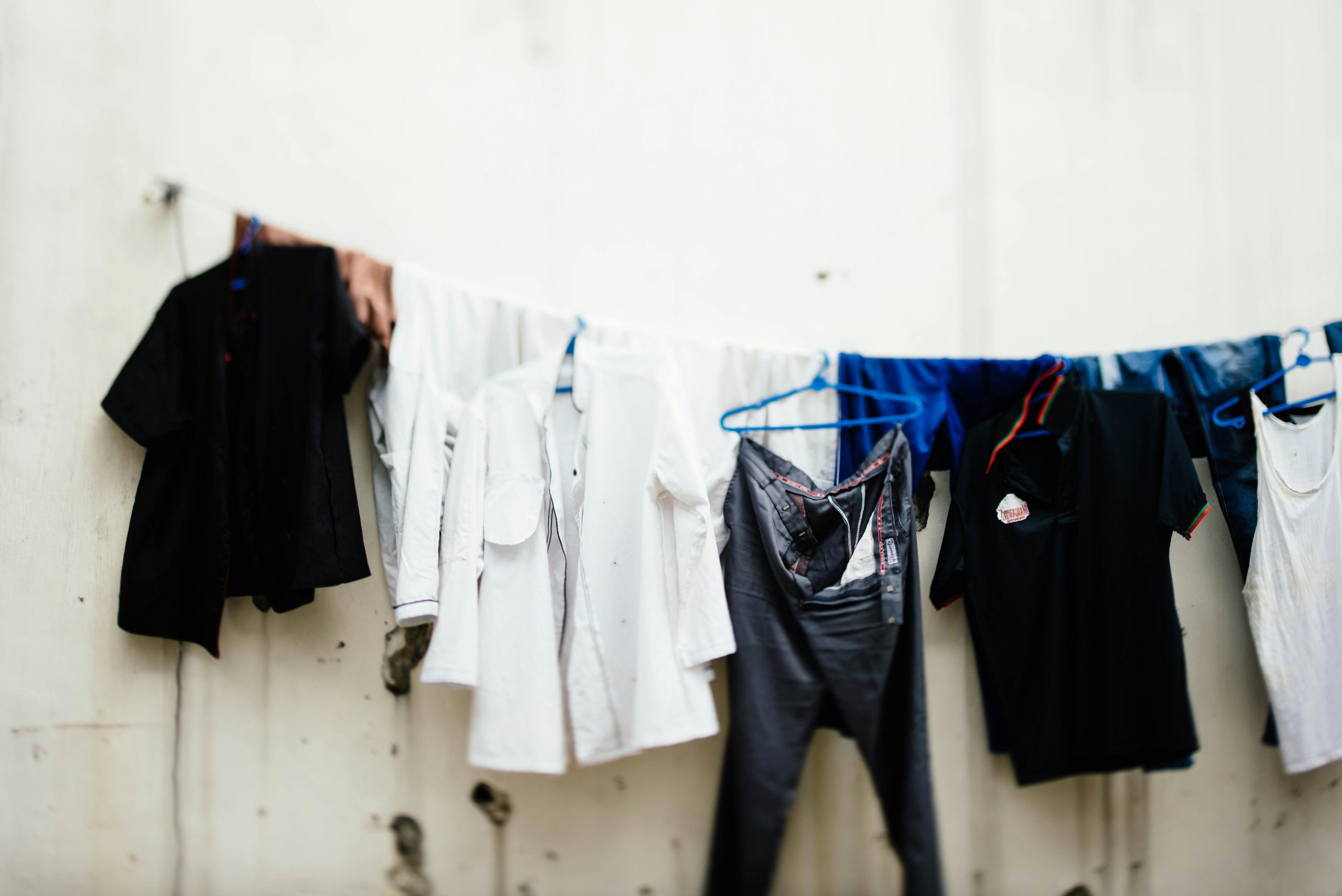
The best thing you can do for a black garment is never put it in a dryer. Lay it flat on a drying rack or hang it on a wooden hanger, away from direct sunlight. If you hang a wet black shirt in the sun to dry “fresh,” you’re giving it a direct UV blast while the dye is in its most vulnerable, swollen state. It’ll fade unevenly along the shoulder and hanger marks.
If You Must Use a Dryer
Use the lowest heat setting possible, often called “air fluff” or “delicate.” Take the clothes out while they are still slightly damp. The last bit of moisture should evaporate on the hanger. If a black t-shirt is left to tumble until it’s bone dry and hot, you’ve already caused thermal damage to the dye. It’s that fine line that makes the difference after fifty washes.
How Sunlight, Storage, and Wear Cause Fading?
A friend once moved into an apartment with a beautiful big window in the closet. Within six months, the left sleeve of every hanging shirt was a shade lighter than the right. The sun doesn’t just fade clothes outdoors. It works through windows, especially on hanging rods near the glass.
Storage Tips That Help
- Closet Placement: Keep black garments away from windows. If you must have them near light, use opaque garment bags or a solid closet door.
- Don’t Overstuff: When clothes are jammed together, getting one item out creates friction against the others. A constantly rubbed sleeve will fade from sheer mechanical wear, even just sitting in the closet.
- Fold Sweaters, Don’t Hang: A heavy black sweater on a hanger will stretch and create shiny stress points at the shoulders. That shininess isn’t fading, but it looks just as bad. It’s the fiber structure being permanently crushed and reflecting light.
Restoring Faded Black Clothes
Sometimes you’re dealing with a shirt that’s already faded. Can you bring it back? Partially.
Dyeing vs. Dye Refreshers
Full-on fiber reactive dye is a project. It’s messy, requires a bucket or a machine you don’t mind staining, and works best on natural fibers like cotton and linen. For a poly-cotton blend, a dye made for synthetics is required, and even then, the thread used for stitching often stays its original color because it’s pure polyester. This can leave a garment with a faded body and bright white seams, which is a specific look.
Dye refreshers or “black wash” products are more like a tinted coating. They deposit a layer of black pigment onto the surface of the fabric. This can work well on a shirt that’s just a little dull, making it look inky again. The catch is that this coating will wash out over a few cycles and can bleed onto lighter items. It’s a temporary fix, not a reversal.
Natural Methods That Work
A classic re-dye method for natural fibers uses black tea, coffee, or black walnut hulls. These are natural tannin dyes. They won’t give you a true jet black like a chemical dye, but they can take a pale grey and deepen it to a rich charcoal or dark brown-black. The color is subtle and fades more softly over time. Boil a very strong pot of black tea, enough to fill a basin, let it cool, soak the garment for an hour, and then rinse with a vinegar-water mix to set the tannins. It smells earthy, and it’s not perfect, but it’s a decent afternoon project for a beloved piece.
Fabric Choices That Hold Black Better
The weave and fiber of a garment determine how long it will stay black. Here’s a quick look at common fabrics.
| Fabric Type | Fade Tendency | Reason | Care Notes |
|---|---|---|---|
| 100% Cotton | Fades quickly | Natural fiber scales lift when wet; dye sits on the surface. | Wash inside-out in cold; air dry only. |
| Cotton-Poly Blend | Fades slowly | Polyester holds dye better; blend stabilizes the fabric. | Prone to pilling, which catches light. |
| Wool | Fades moderately | Takes dye well but sensitive to heat and alkali detergents. | Use wool-specific, pH-neutral detergent. |
| Rayon/Viscose | Fades quickly when wet | Fibers weaken drastically when saturated; dye releases easily. | Dry clean or hand wash with extreme care. |
| Linen | Fades quickly | Stiff fibers abrade themselves; dye has poor adhesion. | Accept this as a natural patina of the material. |
| Nylon/Spandex | Fades slowly | Synthetic fibers are dyed in a molten state; color is locked deep. | High heat in dryer destroys elastic; hang dry. |
If you’re standing in a store trying to decide between two black shirts, rub the fabric against itself. If you see small fibers already rising or a dusty look on your fingers, that’s a sign of a loose weave or surface dye that will wash out fast.
Common Mistakes Beginners Make
- Treating All Clothes the Same. A black cotton t-shirt and a black polyester workout shirt have completely different needs. The workout shirt hates fabric softener and holds onto body odor if not washed with an enzyme detergent occasionally. The cotton shirt hates heat and rough spin cycles.
- Assuming Cold Means Clean. Cold water doesn’t kill dust mites or heavy bacteria. It’s great for color, but you still need the right detergent. If clothes smell musty after a cold wash, the machine itself likely has a biofilm buildup. Run an empty hot cycle with washing machine cleaner or bleach. Then go back to cold for the darks.
- Over-washing. Wearing a shirt for a few hours to a desk job doesn’t mean it’s dirty. Every wash is a toll on the fabric. Spot-clean small marks. Hang the shirt to air out after a light wear. A good black wool sweater might only need washing two or three times a season.
- Using Too Much Detergent. The logic of “more suds equals more clean” is false. Excess detergent doesn’t rinse out and leaves a sticky film that attracts dirt. That film scatters light, turning black fabric grey. It’s a self-perpetuating cycle where you wash more to clean the dirt that the soap itself is trapping.
Summary
The fading of black clothes isn’t just a laundry problem. It’s a physics problem of friction, a chemistry problem of heat, and a biology problem of sweat. The moment you stop fighting the fabric and start working with it, things change. Cold water, turning garments inside out, and getting them away from the dryer’s heat will do more for your wardrobe than any fancy detergent ever could.
A truly black t-shirt that’s been worn for years tells a story of care, not carelessness. Treat the dye gently, and the color returns the favor by staying exactly where it belongs.