White clothes turn yellow due to body oils, detergent buildup, hard water minerals, and improper storage. To stop white clothes from turning yellow, wash them separately in hot water with oxygen bleach, use enzyme-based detergents, and avoid overusing chlorine bleach. Pre-treat stains immediately and store clean whites in breathable containers away from direct sunlight.
Why Do White Clothes Turn Yellow in the First Place?
White clothes turn yellow because of several common culprits that build up over time. Body oils and sweat create the most stubborn yellowing, especially around collars, armpits, and cuffs where skin contact is frequent.
The main causes include:
- Body oils and sweat – These penetrate fabric fibers and oxidize over time.
- Detergent residue – Soap buildup traps dirt and creates a dingy appearance.
- Hard water minerals – Calcium and magnesium deposits make whites look gray-yellow.
- Chlorine bleach overuse – Ironically, too much bleach weakens fibers and causes yellowing.
- Fabric softener buildup – Waxy residues accumulate and attract dirt.
- Dye transfer – Colors from other clothes migrate during mixed loads.
- Improper storage – Heat, humidity, and light accelerate fabric oxidation.
Choose oxygen bleach if your whites show general yellowing across the entire garment. Choose enzyme treatments if yellowing appears mainly around collars, armpits, or other high-contact areas.
What Are the Best Prevention Methods to Stop White Clothes From Turning Yellow?
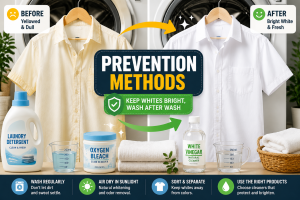
The most effective way to stop white clothes from turning yellow is washing them separately in hot water with the right products. Prevention works much better than trying to restore yellowed whites later.
Essential prevention steps:
- Wash whites only with whites – Never mix with colors, even light pastels.
- Use hot water when fabric care labels allow (typically 130-140°F).
- Choose enzyme-based detergents formulated specifically for white fabrics.
- Add oxygen bleach to every white load for extra brightening power.
- Pre-treat problem areas like collars and armpits before washing.
- Skip fabric softener or use it very sparingly to prevent buildup.
- Don’t overload the machine – clothes need room to move and rinse properly.
Common mistake: Using the same detergent for all laundry loads. Whites need stronger cleaning agents and optical brighteners that could damage colored fabrics.
Quick tip: If you have hard water, add 1/2 cup white vinegar to the rinse cycle once monthly to remove mineral deposits.
How Can You Restore Yellowed Whites Back to Bright White?
Oxygen bleach soaking followed by a hot wash removes most yellowing from white clothes effectively and safely. This method works better than chlorine bleach because it breaks down stains without weakening fabric fibers.
The restoration process:
- Fill a large basin with hot water (as hot as the fabric can handle).
- Add oxygen bleach powder following package directions (usually 1-2 scoops per gallon).
- Submerge yellowed whites completely and let soak 4-8 hours or overnight.
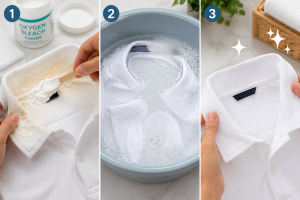
- Make a paste of oxygen bleach and water for stubborn collar/armpit stains.
- Apply paste directly to problem areas and let sit 30 minutes.
- Wash in hot water with enzyme detergent and additional oxygen bleach.
- Air dry in sunlight if possible – UV rays provide natural bleaching.
Choose this method if your whites have moderate to heavy yellowing. Choose professional cleaning if the garments are delicate, vintage, or have care labels requiring special handling.
Edge case: For antique linens or delicate fabrics, test oxygen bleach on a hidden area first. Some vintage textiles may be too fragile for this treatment.
What Products Work Best to Stop White Clothes From Turning Yellow?
Enzyme-based detergents combined with oxygen bleach provide the most effective cleaning power for maintaining white clothes. These products break down protein-based stains and lift embedded dirt without damaging fabric fibers.
Top product categories:
| Product Type | Best For | How It Works |
|---|---|---|
| Oxygen bleach | General yellowing | Releases oxygen to break down stains |
| Enzyme detergent | Body oils, sweat | Breaks down protein and oil molecules |
| Optical brighteners | Dull appearance | Reflects light to make whites look brighter |
| Bluing agents | Gray cast | Adds blue tint to counteract yellow tones |
Specific ingredients to look for:
- Sodium percarbonate (oxygen bleach).
- Protease enzymes (for protein stains).
- Lipase enzymes (for oil-based stains).
- Optical brightening agents (for enhanced whiteness).
Avoid these products:
- Chlorine bleach for regular use.
- Heavy fabric softeners.
- Detergents with dyes or fragrances.
- Products containing phosphates.
Decision rule: Choose powder detergents over liquids for whites – they typically contain more active cleaning agents and optical brighteners.
How Should You Wash White Clothes to Prevent Yellowing?
Wash white clothes in the hottest water the fabric can handle, using a full cycle with pre-wash treatment for heavily soiled areas. Hot water activates enzymes and dissolves oils more effectively than warm or cold water.
Optimal washing routine:
Before washing:
- Check care labels for temperature limits.
- Pre-treat collars, cuffs, and underarm areas.
- Turn clothes inside out to protect surface fibers.
- Separate by fabric weight (towels vs. delicates).
During washing:
- Use hot water (130-140°F) when safe for fabric.
- Add oxygen bleach along with regular detergent.
- Run a full wash cycle, not quick wash.
- Use extra rinse cycle if your machine has this option.
After washing:
- Remove clothes promptly to prevent wrinkles and mustiness.
- Air dry in sunlight when possible for natural bleaching.
- Avoid over-drying which can weaken fibers.
Common mistake: Washing whites in warm water to “be safe.” Most cotton whites can handle hot water, and the extra heat makes a significant difference in stain removal.
What Storage Methods Help Stop White Clothes From Turning Yellow?
Store clean, completely dry white clothes in cool, dark places with good air circulation to prevent oxidation and moisture buildup. Proper storage prevents more yellowing than any cleaning method can fix.
Best storage practices:
- Ensure clothes are 100% clean before storing – even invisible residues yellow over time.
- Use breathable storage containers like cotton garment bags or cedar chests.
- Avoid plastic bags which trap moisture and promote mildew.
- Keep away from direct sunlight and heat sources like radiators.
- Store in cool, dry locations like bedroom closets rather than basements or attics.
- Add moisture absorbers like silica gel packets in humid climates.
- Refold periodically to prevent permanent creases and check for issues.
Phenolic yellowing prevention:
Some whites yellow due to chemical reactions with packaging materials containing BHT (butylated hydroxytoluene). This “phenolic yellowing” happens even to clean clothes.
To prevent this:
- Remove plastic packaging immediately after purchase.
- Wash new whites before long-term storage.
- Use acid-free tissue paper between folded items.
- Avoid cardboard boxes for long-term storage.
Choose climate-controlled storage if you’re storing valuable white linens, wedding dresses, or vintage clothing for extended periods.
How Often Should You Treat Whites to Prevent Yellowing?
Treat white clothes with oxygen bleach every 3-4 washes or monthly, whichever comes first, to prevent buildup that leads to yellowing. Regular maintenance prevents the deep-set stains that require aggressive restoration methods.
Treatment schedule:
Weekly (for frequently worn items):
- Pre-treat visible stains immediately.
- Use enzyme-based detergent for all white loads.
- Wash in hottest safe water temperature.
Monthly:
- Deep clean with oxygen bleach soak.
- Run washing machine cleaning cycle.
- Check stored whites for any yellowing signs.
Seasonally:
- Evaluate storage conditions.
- Replace old detergents and cleaning products.
- Professional cleaning for delicate white items.
Signs you need more frequent treatment:
- Yellowing appears after just a few wears.
- Whites look dingy even when clean.
- Stains become harder to remove over time.
- Fabric feels stiff or rough.
Adjust frequency based on:
- How often you wear the items?
- Your water hardness level.
- Climate and humidity.
- Type of fabric and construction.
Common Mistakes That Make White Clothes Turn Yellow Faster
Using too much detergent creates soap residue that actually attracts dirt and makes whites look dingy over time. Many people think more soap equals cleaner clothes, but excess detergent is one of the fastest ways to ruin white fabrics.
Top mistakes to avoid:
- Overusing detergent – Follow package directions exactly.
- Mixing whites with colors – Even “colorfast” items can transfer dye.
- Using chlorine bleach regularly – It weakens fibers and causes yellowing.
- Washing in cold water only – Heat is necessary to break down oils.
- Storing damp clothes – Moisture accelerates yellowing and mildew.
- Ignoring water quality – Hard water minerals build up over time.
- Skipping pre-treatment – Stains set deeper with each wash cycle.
The fabric softener trap:
Fabric softener makes clothes feel nice but leaves waxy residues that attract dirt. Use it sparingly on whites or skip it entirely.
The “gentle cycle” mistake:
Whites usually need agitation to get truly clean. Save gentle cycles for delicates – most cotton whites can handle regular wash cycles.
Summary
Learning how to stop white clothes from turning yellow requires consistent prevention rather than reactive cleaning. The key steps are washing whites separately in hot water, using oxygen bleach regularly, and storing clean clothes properly away from heat and moisture.
Start implementing these changes with your next white load: pre-treat any visible stains, wash in the hottest safe water with enzyme detergent and oxygen bleach, then air dry in sunlight if possible. For already-yellowed whites, try the overnight oxygen bleach soak method before considering replacement.
The most important habit to develop is immediate stain treatment and proper storage. These simple changes will keep your white clothes looking bright and fresh for years longer than standard washing methods.
FAQ
How long does it take for white clothes to turn yellow?
White clothes can start showing yellowing after 10-15 wears without proper care, or within months if stored improperly. Body oils and detergent buildup accelerate the process.
Can you fix yellowed whites that are years old?
Yes, oxygen bleach soaking can restore most yellowed whites, even old ones. Soak overnight in hot water with oxygen bleach, then wash with enzyme detergent. Very old stains may need multiple treatments.
Is it better to use powder or liquid detergent for whites?
Powder detergents work better for whites because they contain more active cleaning agents and optical brighteners. Liquid detergents are gentler but less effective at preventing yellowing.
Why do my whites turn yellow even when I use bleach?
Chlorine bleach can actually cause yellowing when overused or used on certain fabrics. Switch to oxygen bleach, which is gentler and more effective for regular use.
Should I wash white clothes in hot or cold water?
Use the hottest water the fabric care label allows. Hot water (130-140°F) dissolves oils and activates enzymes much better than cold water for preventing yellowing.
Can hard water make white clothes turn yellow?
Yes, minerals in hard water leave deposits that make whites look gray-yellow over time. Add white vinegar to rinse cycles or install a water softener to prevent this buildup.
How do I prevent white shirts from yellowing around the collar?
Pre-treat collar areas with enzyme-based stain remover before every wash. The oils from skin and hair products cause most collar yellowing, so consistent pre-treatment is essential.
Is sunlight good or bad for white clothes?
Sunlight helps bleach whites naturally when they’re wet but can yellow dry fabrics over time. Air dry whites in sunlight after washing, but store them away from direct sun.
What’s the difference between oxygen bleach and chlorine bleach?
Oxygen bleach is gentler and safer for regular use on whites. Chlorine bleach is stronger but can weaken fibers and cause yellowing when overused. Oxygen bleach works better for prevention.
Can I prevent yellowing in white synthetic fabrics?
Yes, but synthetic fabrics like polyester hold onto oils more than cotton. Use enzyme detergents specifically designed for synthetic fabrics and wash in warm water rather than hot.
How do I know if my whites are too damaged to restore?
If fabric feels thin, tears easily, or has permanent gray/brown stains after oxygen bleach treatment, the damage may be irreversible. Professional restoration might help valuable items.
Should I separate different types of white fabrics?
Yes, wash heavy items like towels separately from delicate whites like dress shirts. Different fabric weights need different wash cycles and can damage each other in the same load.