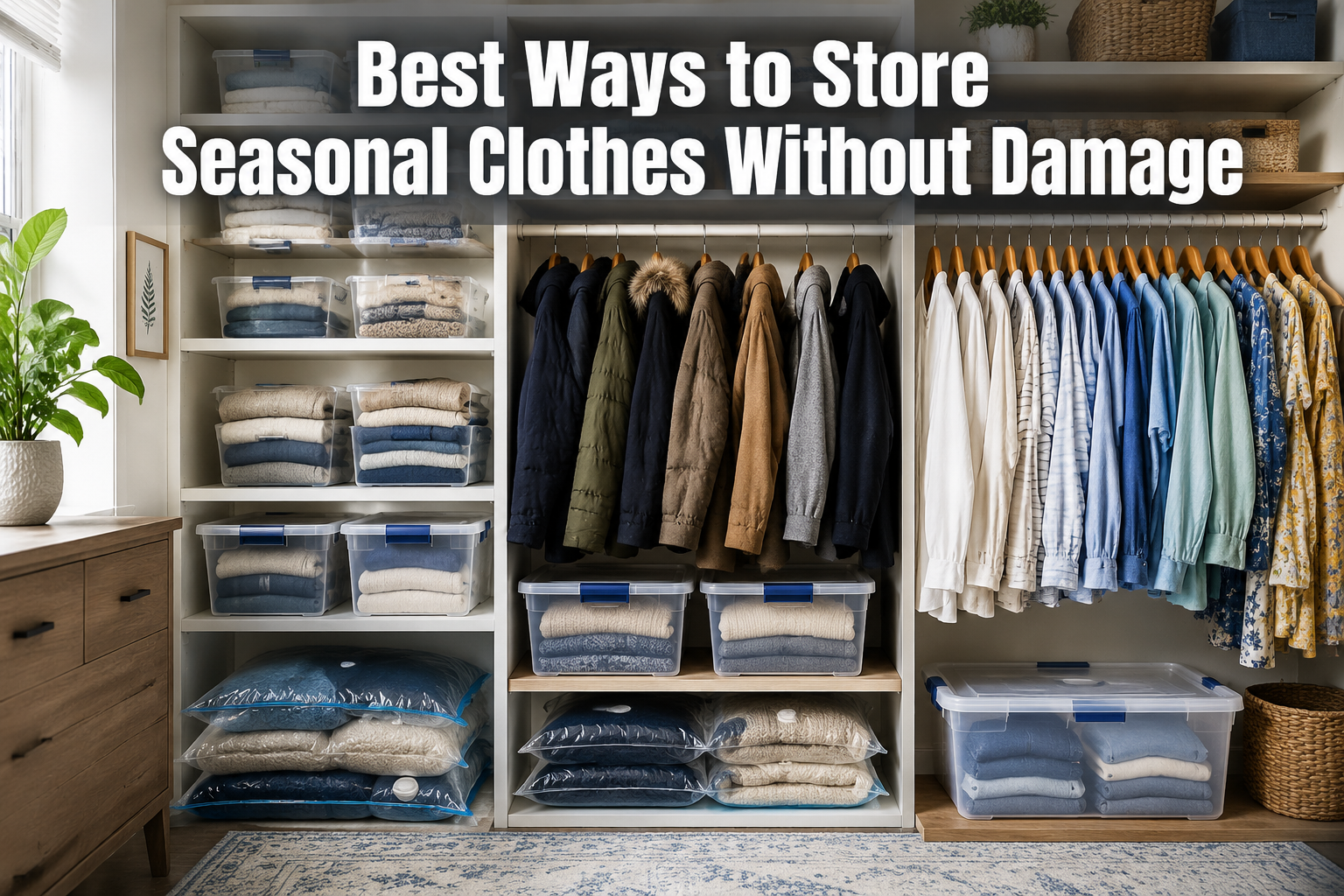
The best way to store seasonal clothes without damage involves three key steps: wash and completely dry all garments before storage, use clean plastic bins with secure lids instead of cardboard boxes, and store items in a cool, dry location away from direct sunlight. This prevents stains from setting, protects against pests and moisture damage, and keeps fabrics in good condition for the next season.
Key Takeaways
- Always wash or dry-clean clothes before storage – even invisible oils and residue attract pests and cause permanent stains.
- Use plastic storage bins with tight lids – cardboard boxes break down and let moisture in over time.
- Ensure everything is completely dry – damp clothes in sealed containers create mold and mildew.
- Choose cool, dry storage locations – avoid attics, basements, and areas with temperature swings.
- Fold most items but hang delicate pieces – prevents creasing while protecting fabric structure.
- Add natural pest deterrents like cedar blocks or lavender sachets to keep moths away.
- Label containers clearly with contents and season for easy identification.
- Check stored items once per season to catch any problems early.
Why Proper Preparation Matters When You Store Seasonal Clothes Without Damage?
Clean clothes before storage or face permanent stains and pest problems. Even clothes that look clean contain invisible body oils, deodorant residue, and food particles that attract moths and cause discoloration during long-term storage.
The biggest mistake people make is storing “lightly worn” items without washing them first. Here’s what happens when clothes aren’t properly cleaned:
- Stains oxidize and set permanently – that barely visible sweat mark becomes a yellow stain after six months.
- Body oils turn rancid – creating unpleasant odors that are hard to remove.
- Moths and other pests are attracted to organic residues on fabric.
- Bacteria and mildew grow in the warm, enclosed environment.
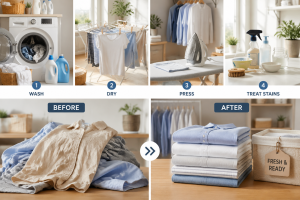
Steps to properly prepare clothes for storage:
- Wash according to care labels – use appropriate water temperature and detergent.
- Dry-clean items that require it – don’t skip this step for wool, silk, or structured garments.
- Treat any visible stains before washing using appropriate stain removers.
- Ensure items are completely dry – even slightly damp clothes will develop mold in storage.
- Iron or steam wrinkled items – this prevents creases from becoming permanent.
Choose machine washing for cotton, synthetic blends, and most casual wear. Opt for dry cleaning if the care label specifies it or for delicate fabrics like silk, wool, or items with special finishes.
How to Choose the Right Storage Containers to Store Seasonal Clothes Without Damage?
Use clean plastic bins with secure lids for most clothing storage needs. Plastic containers protect against moisture, pests, and dust while allowing you to see contents at a glance.
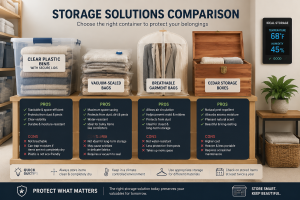
Container options ranked by effectiveness:
| Container Type | Best For | Pros | Cons |
|---|---|---|---|
| Clear plastic bins | Most clothing items | Moisture-proof, pest-resistant, stackable | Can crack in extreme cold |
| Vacuum-sealed bags | Bulky items like comforters | Space-saving, airtight | Can damage delicate fabrics |
| Breathable garment bags | Hanging items | Allows air circulation | Less pest protection |
| Cedar chests | Natural fiber clothing | Natural pest deterrent | Expensive, limited space |
| Cardboard boxes | Never recommended | Cheap | Attracts pests, absorbs moisture |
Container selection rules:
- Choose clear plastic for everyday storage – you can see contents without opening.
- Use vacuum bags only for non-delicate items – the compression can damage structured garments.
- Pick breathable bags for hanging storage – prevents moisture buildup on hanging clothes.
- Avoid cardboard completely – it breaks down over time and attracts silverfish and other pests.
Size guidelines: Use multiple smaller containers rather than one large bin. This makes items easier to find and prevents over-packing, which causes wrinkles and fabric stress.
Where to Store Seasonal Clothes for Maximum Protection?
Store containers in cool, dry locations with stable temperatures between 60-75°F and humidity below 55%. Avoid attics, basements, and other areas with extreme temperature fluctuations.
Best storage locations:
- Bedroom closets – consistent temperature and easy access.
- Under beds – convenient and climate-controlled.
- Interior closets – protected from exterior temperature changes.
- Climate-controlled storage units – ideal for valuable items.
Locations to avoid:
- Attics – extreme heat damages fabrics and fades colors.
- Basements – high humidity causes mold and mildew.
- Garages – temperature swings and pest access.
- Near windows – direct sunlight fades and weakens fabrics.
Storage positioning tips:
- Keep containers off the floor – use shelves or pallets to prevent moisture damage.
- Leave space between containers – allows air circulation.
- Store away from heat sources – avoid furnaces, water heaters, and heating vents.
- Check accessibility – don’t bury containers you’ll need to access.
Choose interior locations over exterior storage whenever possible. The consistent temperature and humidity of living spaces provide the best protection for stored clothing.
Essential Folding and Packing Techniques
Fold most items using the file-folding method to minimize wrinkles and maximize space. This technique keeps clothes upright in containers so you can see everything without unpacking.
File-folding steps:
- Lay garment flat on a clean surface.
- Fold sleeves inward for shirts and sweaters.
- Fold in half lengthwise if needed to fit container width.
- Fold into thirds horizontally creating a compact rectangle.
- Place upright in container like files in a filing cabinet.
Items that should be hung instead of folded:
• Structured blazers and suits – folding damages shoulder construction.
• Delicate dresses – prevents fabric stress and wrinkles.
• Items with embellishments – beading and sequins can snag when folded.
• Silk blouses – delicate fabric wrinkles easily.
Packing order for containers:
- Heavy items on bottom – jeans, sweaters, boots.
- Medium-weight items in middle – shirts, pants, skirts.
- Light items on top – undergarments, accessories, scarves.
Space-saving tips:
- Fill shoes with socks or underwear – maximizes space efficiency.
- Roll t-shirts and casual items – takes less space than folding.
- Use every inch – tuck small items into gaps between larger pieces.
Avoid over-packing containers. Clothes should fit comfortably without being compressed, which prevents wrinkles and fabric damage.
Natural Pest Prevention Methods
Add cedar blocks, lavender sachets, or diatomaceous earth to storage containers to deter moths and other fabric-eating pests. These natural deterrents are safer than chemical mothballs and smell better too.
Effective natural pest deterrents:
- Cedar blocks or balls – natural oils repel moths and smell pleasant.
- Lavender sachets – moths dislike the scent, and it keeps clothes smelling fresh.
- Diatomaceous earth – food-grade powder that’s safe but deadly to insects.
- Peppermint oil on cotton balls – strong scent deters various pests.
Application guidelines:
- Use sparingly – a few cedar blocks or sachets per container is sufficient.
- Replace annually – natural deterrents lose effectiveness over time.
- Keep away from direct fabric contact – oils can stain delicate materials.
- Refresh cedar blocks – light sanding restores the scent.
Signs of pest problems:
- Small holes in fabric – indicates moth larvae damage.
- Tiny brown or white specks – insect droppings or eggs.
- Musty or unusual odors – can indicate pest activity.
- Fine powdery residue – fabric fibers being eaten.
Choose natural methods over chemical mothballs, which contain toxic chemicals and leave strong odors that are difficult to remove from clothing.
Seasonal Rotation and Maintenance Schedule
Check stored clothes once per season and rotate items based on weather patterns in your area. Regular maintenance prevents small problems from becoming major damage.
Quarterly maintenance checklist:
- Inspect containers for damage – cracks, loose lids, or pest entry points.
- Check for moisture or condensation – indicates storage location problems.
- Look for pest signs – holes, droppings, or unusual odors.
- Refresh pest deterrents – replace old cedar blocks or sachets.
- Reorganize as needed – remove items you no longer want.
Rotation timing by season:
| Season | Store Away | Bring Out | Special Notes |
|---|---|---|---|
| Spring | Heavy coats, boots, sweaters | Light jackets, rain gear | Check for winter damage |
| Summer | Spring jackets, long pants | Shorts, swimwear, sandals | Protect from heat storage |
| Fall | Summer clothes, sandals | Sweaters, boots, coats | Prepare for cold weather |
| Winter | Shorts, t-shirts, sandals | Heavy coats, warm accessories | Check heating storage effects |
When to replace storage containers:
- Cracks or damage – compromises moisture protection.
- Persistent odors – indicates bacterial or mold contamination.
- Warped lids – won’t seal properly anymore.
- After 5-7 years – plastic degrades over time.
Plan rotation around local weather patterns rather than calendar dates. Some regions need winter clothes earlier or later than others.
Common Storage Mistakes That Damage Clothes
The most damaging storage mistake is using dirty containers or storing clothes in damp locations. Even clean clothes will develop problems if the storage environment isn’t properly prepared.
Critical mistakes to avoid:
- Using dirty storage containers – bacteria and odors transfer to clean clothes.
- Storing in fluctuating temperatures – causes condensation and fabric stress.
- Over-packing containers – creates wrinkles and restricts air circulation.
- Ignoring care label instructions – some fabrics need special storage conditions.
- Mixing clean and dirty items – contaminates everything in the container.
Fabric-specific storage errors:
| Fabric Type | Common Mistake | Correct Method |
|---|---|---|
| Wool | Storing without moth protection | Add cedar or lavender deterrents |
| Silk | Folding delicate items | Hang in breathable garment bags |
| Leather | Plastic bag storage | Use breathable fabric bags |
| Cotton | Damp storage areas | Ensure completely dry location |
Recovery tips for damaged stored clothes:
- Musty odors – wash with white vinegar added to rinse cycle.
- Wrinkles – steam or iron on appropriate heat setting.
- Yellowing – soak in oxygen bleach solution before washing.
- Pest damage – inspect all stored items and treat storage area.
Prevention strategies:
- Test storage locations – check temperature and humidity over a full year.
- Start small – store a few less important items first to test your system.
- Document what works – keep notes on successful storage methods.
- Invest in quality containers – cheaper options often fail when you need them most.
Learn from storage mistakes rather than repeating them. Each season provides an opportunity to improve your storage system.
Summary
Learning how to store seasonal clothes without damage protects your wardrobe investment and ensures your favorite pieces stay in excellent condition year after year. The key steps are simple but crucial: always clean clothes before storage, use appropriate containers with secure lids, choose stable storage locations, and check your stored items regularly.
Start implementing these storage strategies before your next seasonal transition. Begin by gathering clean plastic storage containers and natural pest deterrents like cedar blocks or lavender sachets. Set aside time to properly wash and dry all items before packing them away.
FAQ
How long can clothes stay in storage without damage?
Properly stored clean clothes can remain in storage for several years without damage. Check stored items annually and refresh pest deterrents to maintain protection.
Should I wash clothes that have been in storage before wearing them?
Yes, always wash or air out stored clothes before wearing. Even properly stored items can develop musty odors or collect dust during storage.
Can I store clothes in vacuum-sealed bags permanently?
Vacuum-sealed bags work well for short-term storage but aren’t ideal for long-term use. The compression can damage fabric structure and elastic fibers over time.
What temperature is too hot for storing clothes?
Avoid storage areas that regularly exceed 80°F. High temperatures accelerate fabric deterioration and can cause synthetic materials to break down.
How do I remove musty smells from stored clothes?
Wash items with white vinegar added to the rinse cycle, or air them outside on a sunny day. For delicate items, try placing them in a sealed container with activated charcoal overnight.
Is it better to store clothes folded or hanging?
Fold most items to save space and prevent stretching. Hang structured garments like suits, delicate dresses, and items that wrinkle easily.
Can I store different types of clothes together?
Yes, but separate heavy items from delicate ones. Avoid storing leather with other materials, as leather needs more air circulation.
How often should I replace cedar blocks in storage containers?
Replace cedar blocks annually or when they no longer have a strong scent. You can refresh them temporarily by light sanding.
What should I do if I find moths in my stored clothes?
Remove all items immediately, wash everything in hot water or dry clean, vacuum the storage area thoroughly, and replace all pest deterrents before re-storing.
Are plastic storage bins safe for all types of clothing?
Plastic bins work well for most clothing but use breathable garment bags for leather, fur, or items that need air circulation.
Should I store shoes with clothes?
Store clean shoes in the same containers if space allows. Stuff shoes with newspaper or socks to maintain their shape and maximize space efficiency.
How do I prevent wrinkles when storing clothes long-term?
Use proper folding techniques, don’t over-pack containers, and consider hanging items that wrinkle easily. Tissue paper between folds can also help prevent creasing.