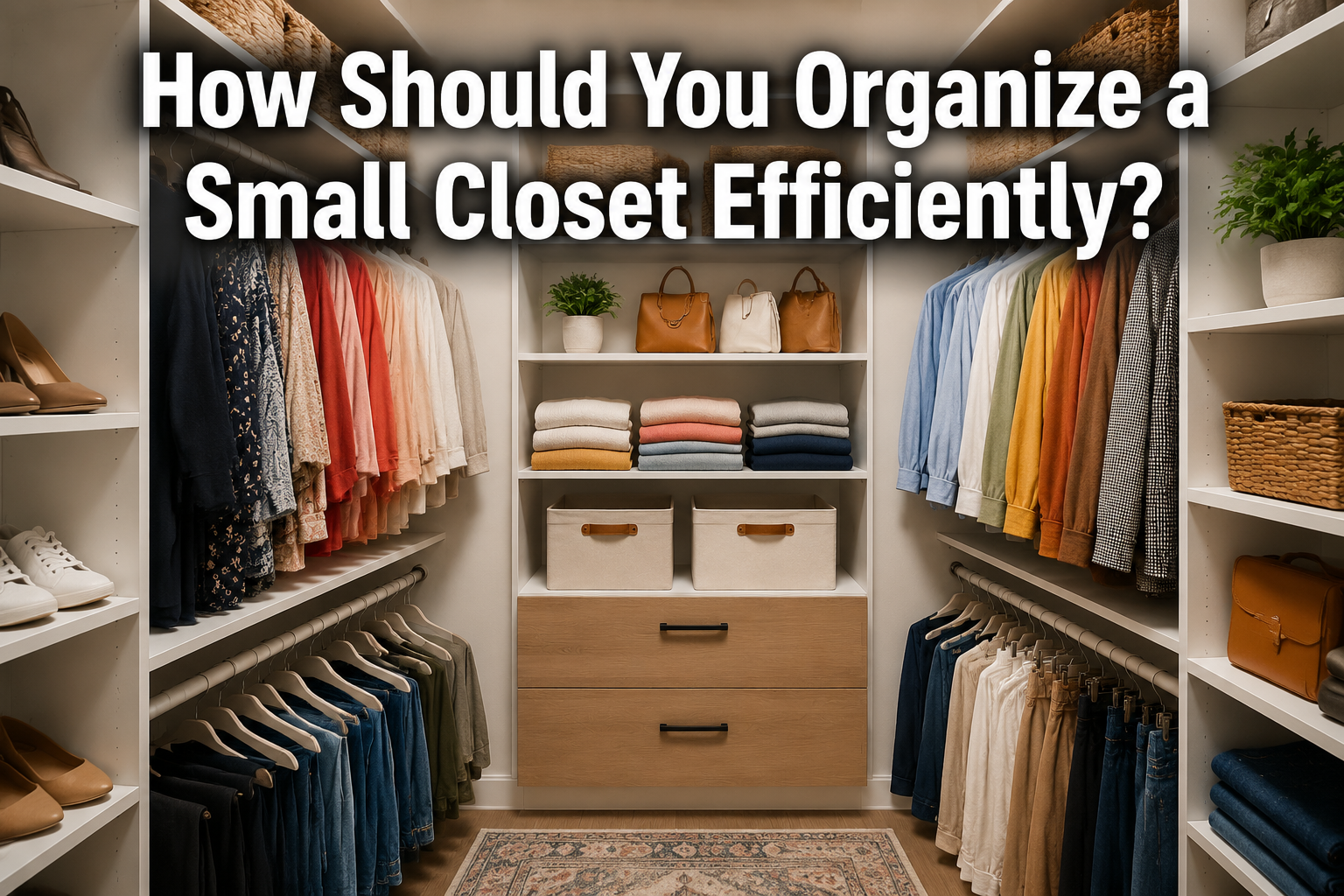
To organize a small closet efficiently, start by decluttering and keeping only items you wear regularly, then maximize vertical space with shelf dividers and hanging organizers, and switch to slim velvet hangers to gain up to 50% more hanging space.
Key Takeaways
- Declutter first – Remove items you haven’t worn in 12 months to create immediate space.
- Use slim hangers – Velvet hangers take up half the space of plastic ones.
- Think vertical – Add shelf dividers, hanging organizers, and over-the-door storage.
- Group by category – Keep similar items together (all pants, all shirts, all dresses).
- Store seasonal items elsewhere – Move off-season clothes to under-bed storage or bins.
- Use clear containers – See what’s inside without opening every box.
- Maximize door space – Install over-the-door organizers for shoes and accessories.
- Keep floors clear – Use hanging shoe organizers instead of floor shoe racks.
What Should You Do First When You Organize a Small Closet?
Start with a complete declutter before buying any storage solutions. This single step creates the most space in the shortest time.
The 12-Month Rule: If you haven’t worn something in a year, donate it. Be honest about clothes that don’t fit or items you bought but never wear. Professional organizers recommend removing 30-50% of items during the first declutter.
Sort into three piles:
- Keep – Items you wear regularly and love.
- Donate – Good condition items you don’t wear.
- Trash – Damaged or stained items beyond repair.
Quick decision tips:
- Choose the item you reach for most if you own multiple similar pieces.
- Keep versatile pieces that work with many outfits.
- Donate expensive items you feel guilty about but never wear.
How Can You Maximize Hanging Space to Organize a Small Closet?
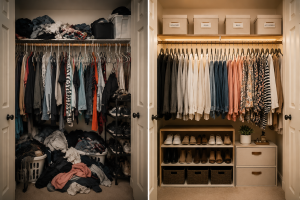
Switch to slim velvet hangers immediately – this change alone can double your hanging capacity.
Research shows that slim velvet hangers take up about half the space of plastic hangers, freeing room for items that normally need drawers. A standard small closet can fit 40-50 items on plastic hangers but 80-100 items on slim hangers.
Best hanger choices:
- Velvet hangers – Clothes don’t slip off, ultra-thin profile.
- Wooden hangers – For heavy coats and structured jackets only.
- Avoid wire hangers – They create creases and take up more space than you think.
Hanging organization tips:
- Group similar items together (all blouses, all pants).
- Hang clothes in the same direction for a clean look.
- Use cascading hangers for tank tops and camisoles.
- Install a second rod below the main rod for shorter items.
What Storage Solutions Work Best for Small Closet Organization?
Vertical storage solutions and clear containers give you the biggest space gains without major renovations.
Essential storage additions:
- Shelf dividers – Keep folded clothes in neat stacks.
- Hanging shelf organizers – Add 3-4 extra shelves in unused vertical space.
- Clear storage bins – See contents without opening every container.
- Over-the-door organizers – Use door space for shoes and accessories.
Smart storage placement:
- Store frequently used items at eye level.
- Put seasonal items on high shelves.
- Use lower areas for shoes and heavy items.
- Keep a small basket for items that need to go to other rooms.
Avoid these storage mistakes:
- Buying storage before decluttering.
- Using opaque containers (you’ll forget what’s inside).
- Overstuffing containers so they’re hard to access.
How Should You Organize Different Types of Clothing in a Small Space?
Group similar items together and use the right storage method for each clothing type to maximize space and accessibility.
Hanging items:
- Dresses and long coats on the main rod.
- Blouses, shirts, and blazers together.
- Pants and skirts (if you prefer hanging them).
Folding and storing:
- T-shirts and casual tops – Fold and store in bins or on shelves.
- Jeans and sturdy pants – Fold or hang based on your preference.
- Underwear and socks – Use drawer dividers or small containers.
- Sweaters – Always fold (hanging stretches them out).
Seasonal rotation system:
Store off-season clothes in vacuum-sealed bags or bins outside the closet. Switch items twice yearly – once for warm weather and once for cold weather.
Quick access rule: Items you wear weekly should be the easiest to reach. Items you wear monthly can go on higher shelves or in bins.
What Are the Best Ways to Store Shoes in a Small Closet?
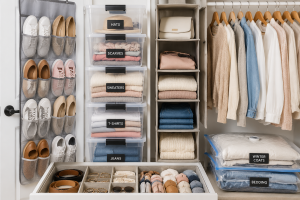
Use vertical shoe storage and door-mounted organizers instead of floor shoe racks that eat up valuable closet floor space.
Space-saving shoe storage:
- Over-the-door shoe organizers – Hold 12-24 pairs without using floor space.
- Hanging shoe shelves – Attach to closet rod for easy access.
- Clear shoe boxes – Stack neatly and see contents easily.
- Under-shelf shoe racks – Double your shelf space for flats and low heels.
Shoe organization tips:
- Keep everyday shoes at eye level for quick access.
- Store seasonal shoes (boots, sandals) on high shelves.
- Use one clear photo per box if shoes aren’t visible.
- Limit yourself to shoes that fit your current lifestyle.
Avoid floor shoe racks – they make small closets feel cramped and reduce space for other storage solutions.
How Can You Use Closet Doors and Walls for Extra Storage?
Transform unused door and wall space into valuable storage areas without permanent modifications.
Door storage solutions:
- Over-the-door hooks – For robes, bags, or tomorrow’s outfit.
- Door-mounted mirrors – Save wall space while checking outfits.
- Slim door organizers – Perfect for belts, scarves, and jewelry.
- Magnetic hooks (if you have a metal door) – Quick temporary storage.
Wall additions:
- Adhesive hooks – No drilling required, perfect for renters.
- Hanging organizers – Attach to existing closet rods.
- Wall-mounted baskets – Store accessories or folded items.
Renter-friendly options: Look for solutions that use adhesive strips, over-the-door hardware, or tension rods that don’t require drilling holes.
What Mistakes Should You Avoid When You Organize a Small Closet?
The biggest mistake is buying storage products before decluttering, which leads to organizing items you don’t actually need or use.
Common organization mistakes:
- Keeping “just in case” items – They rarely get worn and take up precious space.
- Using mismatched hangers – Creates visual chaos and wastes space.
- Ignoring vertical space – Most people only use 60% of their closet height.
- Storing everything in the closet – Some items belong elsewhere.
Shopping mistakes:
- Buying cute storage containers that don’t fit your space.
- Choosing storage based on looks instead of function.
- Not measuring your closet before buying organizers.
Maintenance mistakes:
- Not putting items back in their designated spots.
- Letting laundry pile up instead of putting it away immediately.
- Never reviewing and decluttering again (do this every 6 months).
How Do You Maintain an Organized Small Closet Long-Term?
Set up simple daily habits and review your system every few months to prevent clutter from building up again.
Daily habits that work:
- Put clothes away immediately after laundry.
- Hang up clothes at the end of each day.
- Use the “one in, one out” rule for new purchases.
Weekly maintenance:
- Spend 10 minutes putting items back in their proper places.
- Check for items that need to go to other rooms.
- Prepare outfits for the upcoming week.
Seasonal reviews:
- Switch seasonal items twice per year.
- Declutter items you didn’t wear during the past season.
- Assess if your storage system still works for your needs.
The 80/20 rule: Keep your closet only 80% full. This extra space makes it easier to maintain organization and find items quickly.
Conclusion
Organizing a small closet efficiently starts with ruthless decluttering, then maximizing every inch of space with smart storage solutions. The key changes that make the biggest difference are switching to slim velvet hangers, using vertical space with shelf dividers and hanging organizers, and keeping only items you actually wear.
Take action this week:
- Declutter first – Remove items you haven’t worn in 12 months
- Invest in slim hangers – This single change can double your hanging space
- Add vertical storage – Install one hanging shelf organizer or over-the-door solution
- Create a maintenance routine – Spend 10 minutes weekly keeping things organized
Remember that the best closet organization system is one you’ll actually use consistently. Start with these basic changes, then add more storage solutions as needed. A well-organized small closet will save you time every morning and help you feel more confident about your wardrobe choices.