
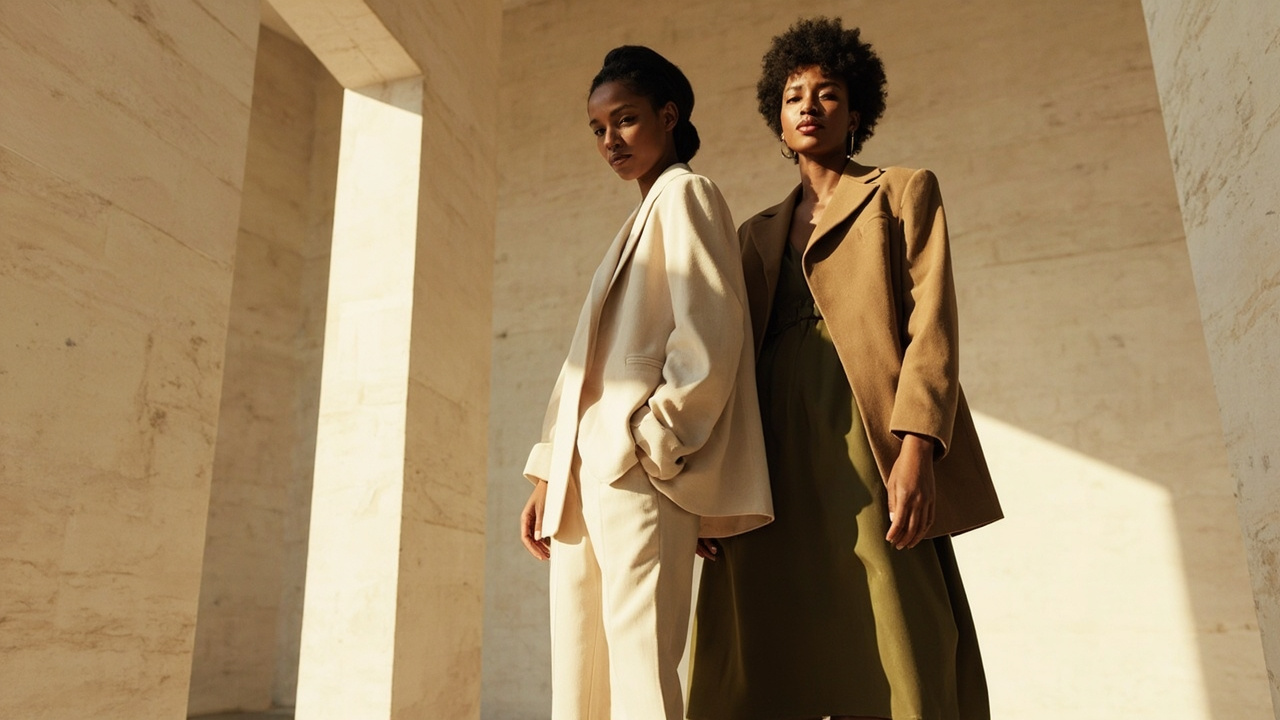
Styling minimalist fashion for different body shapes comes down to three things fit, proportion, and intention.
When you choose the right cuts and silhouettes for your body type, even the simplest outfit looks polished and put-together.
- Minimalist Wardrobe Planning for Every Body Shape
- Designing Capsule Pieces for Apple Shapes
- Choosing Silhouettes to Flatter Pear (Triangle) Figures
- Minimalist Tops and Necklines for Inverted Triangle
- Selecting Dresses That Complement Hourglass Proportions
- Streamlined Trousers and Skirts for Rectangle Frames
- Common Styling Mistakes and How to Avoid Them
- Optimizing Minimalist Accessories for Balance
- FAQ
- Final Thoughts
- Related Fashion Reads
Minimalist Wardrobe Planning for Every Body Shape
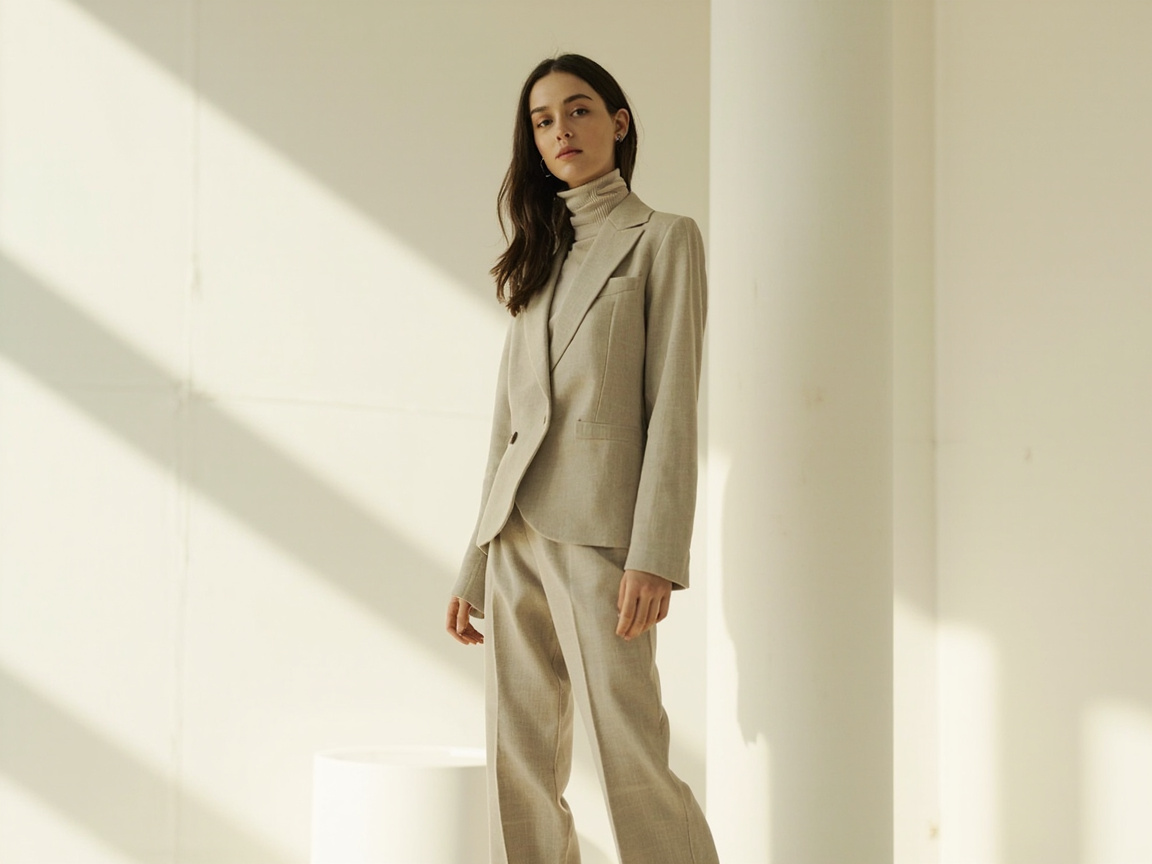
Style Minimalist Fashion For Different Body Shapes works best when the fit, texture, and styling details feel intentional from the very first look.
Minimalist fashion is about fewer pieces, stronger choices. Planning with your body shape ensures those pared-back items actually flatter and feel effortless.
Start by auditing fit and proportion, not just color. A true minimalist wardrobe contains versatile neutrals, three reliable silhouettes, and one tailoring rule tuned to your shape.
Style Minimalist Fashion For Different Body Shapes feels strongest when the fit, texture, and finishing details all support the same style direction.
- Audit: try each core piece seated and standing, note where fabric pulls, gaps, or bulk appear.
- Three silhouettes: streamlined top, defined waist, and long-line outer layer. Carry at least one of each in neutral tones.
- Tailoring rule: invest in one alteration per season, for hems, waist suppression, or sleeve tapering to refine silhouettes.
- Texture strategy: limit to two textures per outfit, for example cotton tee plus wool blazer, to keep looks clean yet dimensional.
Designing Capsule Pieces for Apple Shapes
Apple shapes usually carry weight through the midsection and have slimmer legs. Minimalist pieces should create vertical lines and shift attention away from the torso.
- Choose V-necks and open collars to elongate the neck, and avoid high crew necks that compress the torso.
- Favor straight-leg trousers or tapered cropped pants to show legs, pick mid to high rise for gentle control without cutting across the waist.
- Long-line blazers and cardigans that end near the hip or mid-thigh create a vertical plane, camouflage the midsection, and read as intentional minimalism.
- Build wrap or A-line dresses in your capsule, with light structure at the shoulder and a defined underbust or waist seam to create shape.
- Keep fabrics soft but structured, for example medium-weight cotton or lightweight wool, to avoid cling while maintaining clean lines.
- Mistake to avoid: boxy tops that end at the widest part of your torso, which add bulk rather than streamline.
Choosing Silhouettes to Flatter Pear (Triangle) Figures
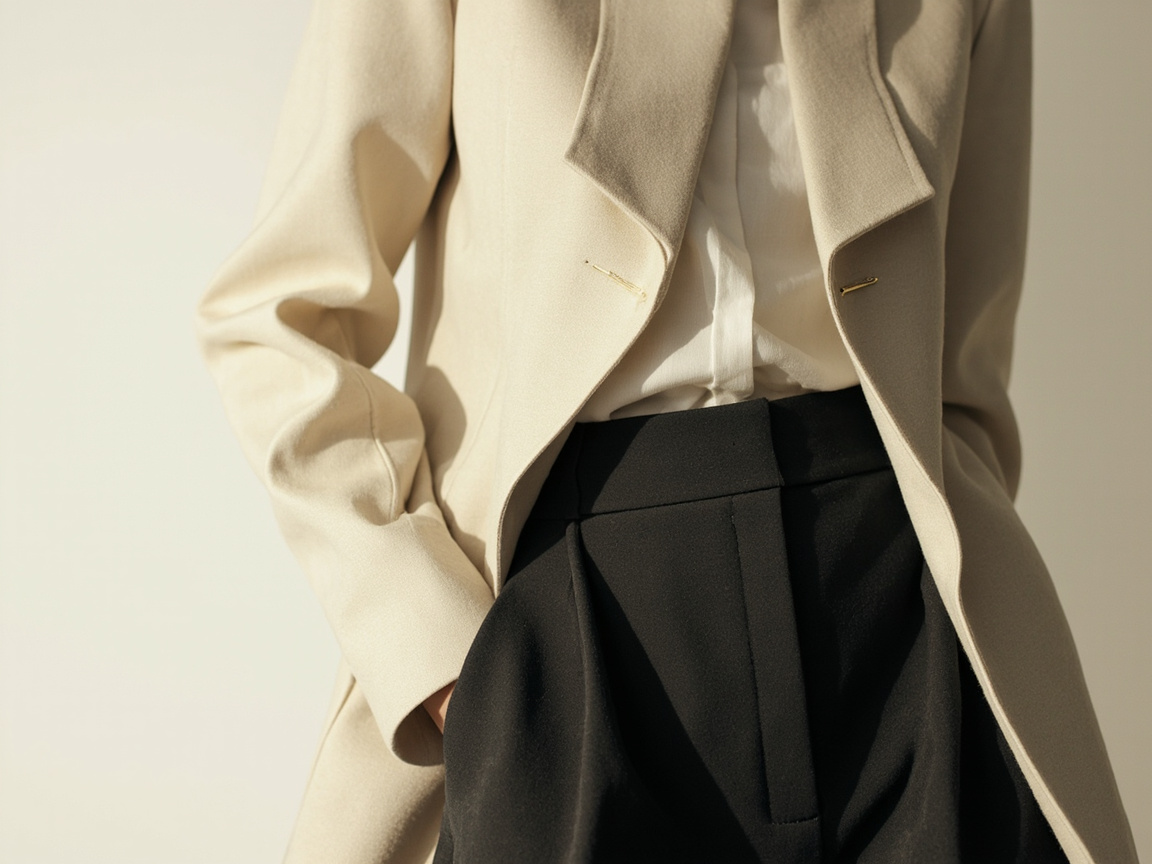
Pear shapes have narrower shoulders and a fuller hip and thigh area. Minimalist styling should balance proportions by adding subtle volume up top and slimming the lower half.
- Emphasize the upper body with statement necklines, boat necks, or small shoulder pads to broaden the shoulder line while staying minimalist.
- Choose A-line skirts and wide-leg trousers that skim the hips without clinging, in single-tone colors to elongate the lower body.
- Opt for cropped, structured jackets that hit at the waist or slightly above, to visually lift and balance the hip line.
- Prefer mid-rise to high-rise bottoms with a clean waistband, avoid low rises that can create an unflattering break at the hips.
- Color and contrast: keep bottoms monochrome and introduce contrast or detail on tops, such as a textured knit or minimal print, to draw the eye upward.
- Mistake to avoid: tight skinny pants paired with very small tops, which can overemphasize the hips instead of balancing them.
Minimalist Tops and Necklines for Inverted Triangle
Inverted triangle shapes carry broader shoulders and a narrower waist and hips. The minimalist goal is to soften the shoulder line and add subtle balance without extra volume or fussy details.
- Choose necklines that draw the eye downward, for example V-necks or deep scoop necks, to create vertical lines and a longer torso.
- Opt for simple, structured garments with minimal shoulder padding and clean seams, such as a fitted boatneck with a slightly lower armhole.
- Use understated horizontal elements at the hip to visually widen the lower body, for example a tucked relaxed top over high-rise trousers, rather than shoulder embellishments.
- Prefer sleeves that skim the arm, like dolman or slightly flared three-quarter sleeves, which soften the shoulder without adding bulk.
- Stick to monochrome or tonal tops that create an uninterrupted line, then introduce contrast or texture below to shift proportion.
Mistakes to avoid: high, tight crew necks that emphasize width, heavy shoulder details, and boxy cropped tops that end at the widest point of your shoulders.
Selecting Dresses That Complement Hourglass Proportions
Hourglass figures benefit from clothing that highlights a defined waist while keeping overall lines clean and balanced. Minimalist dresses should celebrate proportion with restrained tailoring.
- Pick wrap dresses, belted shirtdresses, or sheath cuts that nip at the natural waist, with seams or darts to follow your curves precisely.
- Choose fabrics with slight structure, such as midweight cotton blends or crepe, which hold shape without clinging excessively.
- Necklines like V, square, or modest scoop work well, because they frame the bust without adding visual bulk.
- Keep sleeve and skirt volumes proportional; if the skirt is slim, a small puff or cap sleeve is fine, but avoid extremes on both ends.
- For a minimalist evening look, a bias-cut slip dress with a defined waist or a fitted midi with clean side seams creates an elegant silhouette.
The waist measurement should be the most defined point visually, and fabric stretch should be moderate enough for comfort, not to obscure shape.
Streamlined Trousers and Skirts for Rectangle Frames
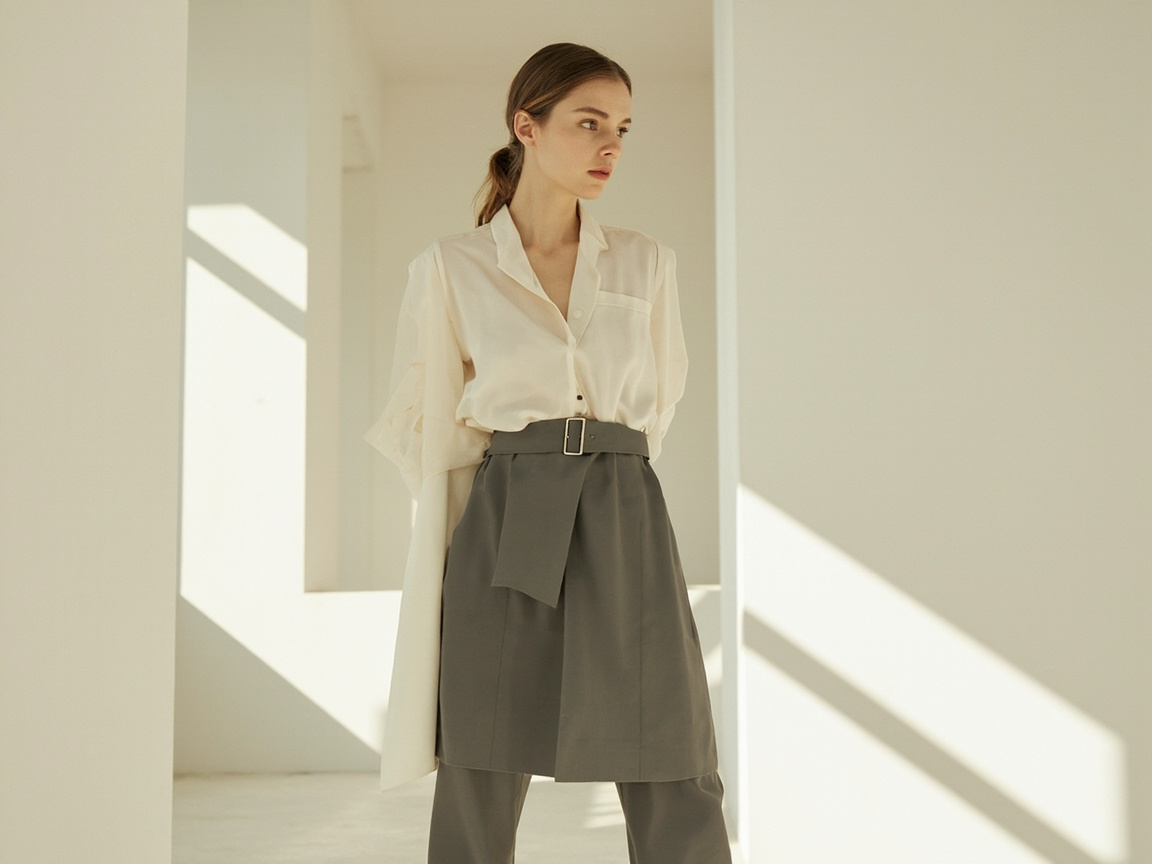
Rectangle frames have similar shoulder, waist, and hip measurements. The aim is to create impressions of curves while keeping minimalist restraint.
- Opt for high-rise trousers with a slight taper or wide leg, to elongate the leg and create a clearer waist-to-hip relationship.
- Select skirts with gentle volume, like A-line or soft pleated minis, to add subtle hip definition without heavy structure.
- Use belts or seam detailing at the waist, for example a tonal belt or topstitched waist panel, to create a focal point and imply a waist.
- Choose trousers with front pleats or a single crease, which introduce shape without ornamentation.
- Keep proportional length in mind: cropped trousers that end at the ankle can widen the hips visually, while full-length styles create a smoother line.
Mistakes to avoid: boxy, shapeless bottoms that hide your natural line, and overly stiff fabrics that read bulky. Instead, favor drape and clean tailoring for a modern, minimalist result.
Common Styling Mistakes and How to Avoid Them
Minimalist dressing can look effortless, but a few recurring mistakes undermine balance and proportion. Below are precise errors to watch for, with corrective rules you can apply immediately.
- Wearing the wrong proportions: A too-tight top with slim bottoms can make an apple or rectangle shape look unbalanced. Fix this by choosing one fitted piece and one relaxed piece, for example a fitted V-neck blouse with straight-leg trousers.
- Ignoring neckline impact: Heavy necklines can overwhelm a small bust, while high necks can shorten a long neck. Use V-necks or scoop necks to elongate, and boat or square necks to broaden shoulders when needed.
- Skipping structure on soft bodies: Soft, curvy figures benefit from defined seams and waist emphasis. Opt for tailored blazers, wrap dresses, or belts at the natural waist to create shape.
- Overlooking hem length: A midi that hits at the widest part of your calf can visually shorten legs. Choose skirts and trousers that either hit above the widest point, or go full length with a slight break at the shoe.
- Too many tiny layers: Multiple thin layers can read cluttered rather than minimalist. Limit layers to two strong pieces, such as a simple tee and a structured coat, to maintain clarity.
- Ignoring fabric weight: Flimsy fabrics cling and reveal lines, while too-stiff fabrics add bulk. Match fabric weight to silhouette goals, for example, medium-weight viscose for drape or crisp cotton for structure.
- Bad fitting shoes: Chunky shoes on a petite frame can overwhelm; dainty shoes on a larger frame can look fragile. Use shoe scale to balance body size, preferring platform flats or block heels for larger frames and low-profile loafers for petite frames.
Optimizing Minimalist Accessories for Balance
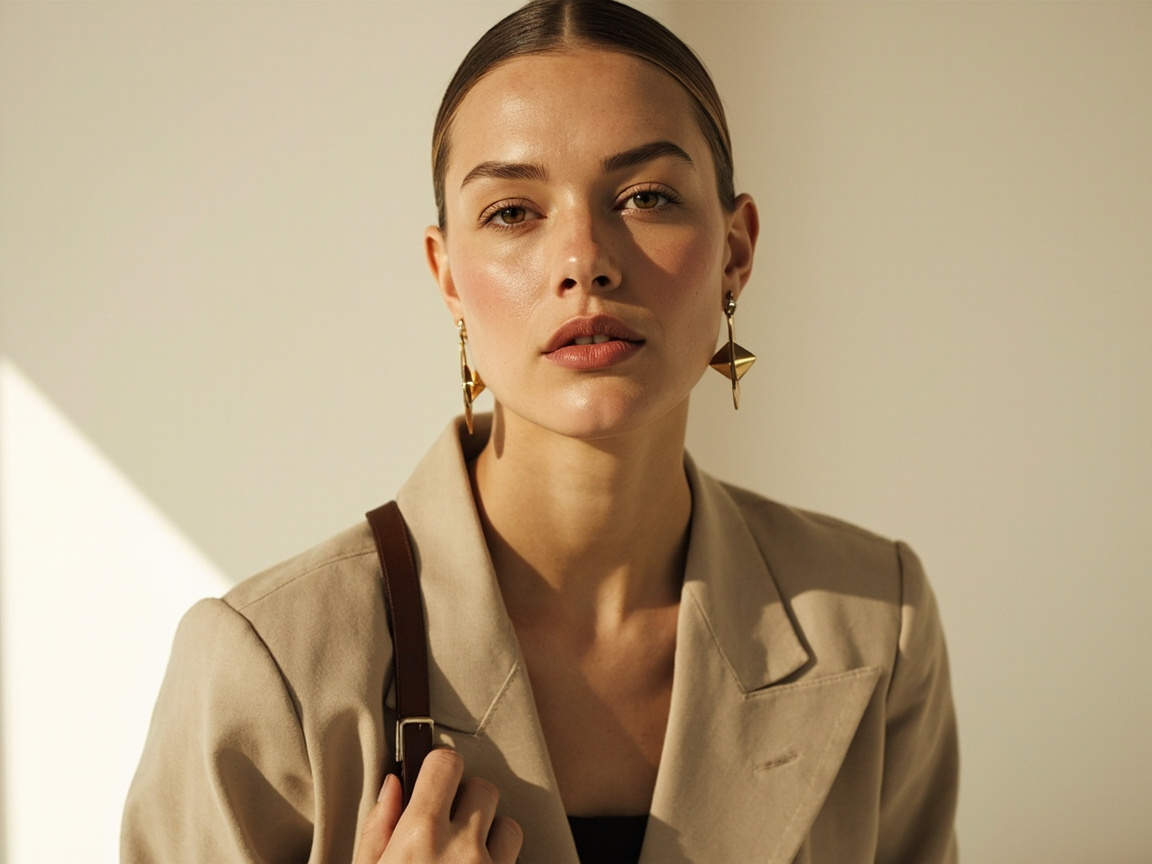
Accessories should support minimalist silhouettes, not compete with them. Choose a small number of well-scaled pieces that correct silhouette imbalances and add visual interest.
- Choose scale intentionally: For broader shoulders, wear longer necklaces to draw the eye downward. For narrow shoulders or small busts, use short, structured collars or chokers to add width at the top.
- Belt strategically: A narrow belt at the natural waist defines hourglass curves. For apple shapes, a wide belt slightly above the natural waist creates an empire line and elongates the legs.
- Prioritize one focal piece: Let either your bag, shoe, or jewelry be the statement. For example, a sculptural tote pairs best with simple flats and minimal jewelry to keep the outfit cohesive.
- Select bag shapes for balance: Triangle or pear shapes benefit from top-handle or shoulder bags that add volume at the upper body. For inverted triangle shapes, choose compact crossbodies to avoid adding shoulder weight.
- Metal and color choices: Warm skin tones often suit gold or brass, which can soften minimalist palettes. Cool tones pair well with silver or matte gunmetal, offering a clean contrast to neutral clothing.
- Shoes as lengtheners: Nude or tonal shoes lengthen the leg, useful for petite or apple shapes. For long-legged frames, a contrasting shoe can ground the outfit without elongating further.
- Minimal jewelry rules: Use geometric pieces that mirror garment lines, for example a circular pendant with a soft draped dress, or a rectangular cuff with structured suiting. Limit to two jewelry items to maintain the minimalist intention.
When styling Style Minimalist Fashion For Different Body Shapes, focus on silhouette first, then use shoes, outerwear, and accessories to sharpen the look naturally.
If you want Style Minimalist Fashion For Different Body Shapes to feel wearable in real life, let one key piece lead and keep the supporting details balanced.
For more styling inspiration, take a look at Slim Leather Belt Outfits.
FAQ
How do I keep minimalist outfits interesting without patterns?
Use texture, tailoring, and tonal layering. Mix matte and glossy fabrics, add a structured blazer, or layer slightly different neutrals to create depth while staying pattern-free.
Can minimalist fashion flatter every body shape?
Yes, when you adjust proportion, neckline, and structure to your shape. For example, apples benefit from V-necks and straight legs, while triangles use statement necklines and shoulder details.
What are quick swaps to make a minimalist look more polished?
Swap sneakers for low-heeled loafers, add a fitted blazer, and tuck or belt the top. These small changes immediately sharpen the silhouette.
How many accessories are too many in minimalist style?
Usually more than two focal accessories becomes clutter. Keep one primary piece, like a bag or shoes, plus one complementary jewelry item for balance.
Final Thoughts
Minimalist dressing is about deliberate choices, not deprivation. Use proportion, fabric weight, and a few well-chosen accessories to create outfits that flatter your body and read effortlessly refined.